
Moz alternatives are the first thing most SEOs search for when Moz Pro starts to feel small for the work they actually do. The tool taught a generation of marketers how search works, and its Domain Authority score still shows up in pitch decks and link prospecting sheets everywhere. But the plans cap tracked keywords tightly, the link index is smaller than the biggest rivals, and a solo marketer on the $49 Starter plan gets only 50 tracked keywords. If that sounds like your account, you do not need a lecture on SEO. You need a tool that fits the size of your site, your client list, and your budget, without forcing you into a plan two tiers above what you use.
We checked current vendor pricing pages for every tool in this guide, lined the plans up against Moz Pro, and looked at the jobs a Moz user actually replaces: keyword research, rank tracking, site audits, backlink research, and reporting. The short answer first: Ahrefs is the strongest direct replacement for most teams. Mangools and Ubersuggest are the honest budget picks. SE Ranking is the value pick for agencies that live on client reports. Screaming Frog and Majestic are specialists, not suites, and they work best beside a suite, not instead of one. Read on for the detail behind each pick, because the cheapest plan on paper is rarely the cheapest plan for your workflow.
Quick Picks: The Short Version
Ahrefs
The deepest backlink and keyword data in this list, for teams that will use it weekly
Price Free for verified sites, paid from $29/month
Free plan for verified sites; no free trial on paid plans
Ubersuggest
A full small-site toolkit at the lowest monthly price here, with a lifetime option
Price From $29/month, lifetime from $290
Free tier with limits
SE Ranking
Agency reporting and 2,000 tracked keywords a day for less than Moz Medium
Price From $129/month ($103.20 billed annually)
14-day trial, no card required
Moz Alternatives at a Glance
| Tool | Best for | Free plan or trial | Paid from |
|---|---|---|---|
| Ahrefs | All-round backlink and keyword research | Free plan for verified sites | $29/month (Starter) |
| Semrush | Broadest suite, SEO plus PPC and content | Limited free plan, 7-day trial | $139/month (SEO) |
| Mangools | Simple keyword research for beginners | Free plan, 10-day Free+ trial | $61/month ($37.70 billed annually) |
| SE Ranking | Agency reporting and rank tracking value | 14-day trial, no card | $129/month ($103.20 billed annually) |
| Ubersuggest | Budget keyword research for small sites | Free tier with limits | $29/month |
| Serpstat | Budget all-in-one research | 7-day trial | $69/month ($50 billed annually) |
| Screaming Frog | Technical site audits | Free up to 500 URLs | $279 per licence per year |
| Surfer SEO | On-page content optimisation | 7-day free trial (Pro) | $59/month ($49 billed annually, Discovery) |
| SpyFu | Competitor keyword and PPC history | Free searches with limits | $39/month (Basic) |
| Majestic | Pure link intelligence | Free tools with limits | $49.99/month (Lite) |
Prices are US list prices checked against vendor pricing pages. Confirm the checkout price before you buy, because several vendors repriced during 2026 and older comparison posts still show retired plans.
Why People Look for a Moz Alternative
Start with the keyword cap, because that is where most Moz accounts break first. Moz Pro Standard at $99 per month tracks 300 keywords across 3 campaigns. Medium at $179 tracks 1,500. Large at $299 tracks 3,000. Those numbers were fine when a site targeted a handful of pages. A content site with 40 articles, or an agency with six clients, burns through 300 keywords in a week. SE Ranking Core tracks 2,000 keywords a day for $129 a month. Serpstat Individual gives 10,000 position checks a month for $69. The gap is not subtle, and it is the reason many Moz users leave while still liking the tool.
Then there is the link data. Moz built its name on Domain Authority, a 1 to 100 score that predicts ranking strength from links. Google does not use it, and no other tool uses it either. Ahrefs answers with Domain Rating, Semrush with Authority Score, Majestic with Trust Flow and Citation Flow, and SE Ranking with Domain Trust. Every one of those scores runs on a different index, so the numbers will not match Moz, and they should not be compared point for point. What matters is the index behind the score. A bigger, fresher index finds links Moz misses, and that changes outreach lists, competitor gaps, and disavow decisions.
Price is the third reason, and it cuts both ways. Moz is cheaper than Ahrefs Lite and Semrush at the entry tier, and its interface is still one of the easiest to learn. But a tool you outgrow in three months is not cheap. It costs a migration, a new learning curve, and a second subscription while you run both side by side. The tools below are grouped by the job they replace, so you can pick the one you will still use in a year, not the one with the lowest first invoice.
How We Chose These 10 Tools
We started from the tools that show up again and again when SEO teams compare platforms, then filtered hard. A tool made this list only if it is actually available to buy or use in 2026, if it covers at least one core Moz job properly (keyword research, rank tracking, audits, backlinks, or content optimisation), and if it offers at least one clear advantage over Moz Pro: a bigger index, a higher keyword cap, a lower price, a specialist depth Moz lacks, or a genuinely simpler workflow. Tools that only repeat Moz at a higher price did not make it. Neither did tools with no current pricing page to check.
1. Ahrefs: Best Overall Moz Alternative
Ahrefs is the closest thing to a straight upgrade from Moz Pro, and it is the tool most ex-Moz users land on. The core loop is familiar: type a domain into Site Explorer, see its backlinks and top pages, open Keywords Explorer for a topic, and check rankings in Rank Tracker. The difference is scale. The backlink index is one of the largest in the industry, it refreshes daily, and the keyword database runs into the tens of billions of suggestions. When you pull a competitor gap report here, the list is longer, and the missing keywords are usually real gaps, not data holes.
The workflow that wins people over is competitor research done properly. You can open a rival site, see which pages bring it traffic, which keywords those pages rank for, and which sites link to them, all in one place. Content Explorer adds a second angle: find pages that earned links on a topic, so your outreach list starts from pages that already proved link-worthy. For a small team, that single workflow replaces three separate Moz reports and a spreadsheet.
Ahrefs is not cheap, and it is not gentle on occasional users. There is no free trial on paid plans, only a free plan for sites you verify, and the $29 Starter plan is deliberately narrow: light keyword and competitor lookups, 50 tracked keywords, and one month of history. Real work starts at Lite, $129 per month, with 750 tracked keywords and 5 non-verified projects (verified projects are unlimited). Extra seats cost extra on every tier, so a three-person team pays well above the headline price. If you only check SEO a few times a month, that money buys a lot of Mangools or Ubersuggest instead. For a fuller head-to-head on these two tools, see our Ahrefs vs Moz comparison.
Best for: teams and serious site owners who want the deepest backlink and keyword data and will use it weekly.
Official site: Ahrefs
What we like about Ahrefs
- Brand Radar add-on tracks AI search mentions from $199 per month
- Lite includes API access
- Standard removes the Lite credit cap with unlimited credits per user.
What could be better
- Rank Tracker updates weekly on subscription plans, not daily
- Starter cannot be billed annually
- Enterprise requires an annual commitment.
Price: Free plan for verified sites; Starter $29/month; Lite $129/month; Standard $249/month; Advanced $449/month; Enterprise from $1,499/month. Annual billing saves up to 17% on Lite and above.

2. Semrush: Best Broad Suite Moz Alternative
Semrush is the broadest replacement for Moz Pro, and the right pick when SEO is only part of the job. Where Moz gives you a focused SEO toolkit, Semrush adds PPC research, social monitoring, content tools, market analysis, and now AI visibility tracking. A team that reports on paid search and organic search together, or that plans content from keyword gaps, gets all of it under one login instead of stitching three subscriptions together.
The keyword database is the headline strength. It is one of the largest published keyword sets, across more than 140 geographic databases, and the Keyword Magic Tool turns one seed keyword into thousands of grouped ideas with intent labels. Position Tracking, Site Audit, and Backlink Analytics cover the Moz core, and the Content Marketing Toolkit, on higher tiers, scores drafts against the pages already ranking. That last piece is where Semrush pulls away from Moz for content teams: the brief writes itself from the live results, not from guesswork.
The cost is the catch, and the plan names changed in 2026, so older guides mislead. The current self-serve ladder starts with the SEO plan at $139 per month ($117.33 billed annually), then Starter at $199, Pro+ at $299, and Advanced at a custom price, sold through a demo rather than self-serve checkout. The old Pro, Guru, and Business names still appear on comparison pages and for existing subscribers, which is why two guides can quote different names for the same money. One seat is included on every tier, extra seats start at $45 per month, and the specialist toolkits for content, local, social, and ads sit on top. Budget the whole stack, not the first line.
Best for: in-house teams and agencies that need SEO, PPC, content, and AI visibility in one subscription.
Official site: Semrush
What we like about Semrush
- Looker Studio connector on Guru-equivalent tiers and above
- Share of Voice tracking on Business-equivalent tiers
- a limited free plan lets you test keyword lookups before paying.
What could be better
- Content Marketing Toolkit is missing from the entry SEO plan
- API access waits for the top tiers
- annual billing is prepaid as one lump sum, not spread monthly.
Price: SEO $139/month ($117.33 billed annually); Starter $199/month ($165.17 billed annually); Pro+ $299/month ($248.17 billed annually); Advanced custom pricing (demo required).
3. Mangools: Best Simple Moz Alternative
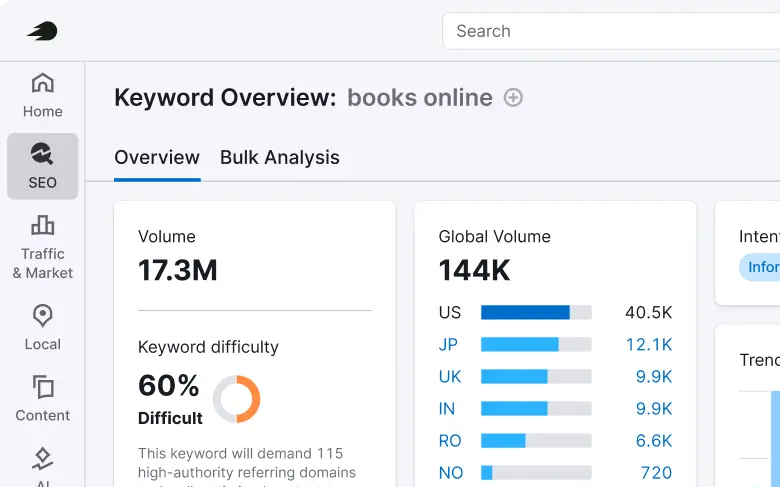
Mangools is the tool to pick when Moz feels complicated and Ahrefs feels expensive. It bundles five small tools under one login: KWFinder for keyword research, SERPChecker for result analysis, SERPWatcher for rank tracking, LinkMiner for backlinks, and SiteProfiler for domain overviews. Each one does one job, with a clean screen and no wall of tabs. A beginner can open KWFinder, type a topic, and understand the difficulty score in a minute, because the score is built from the pages actually ranking, not from an abstract formula.
The keyword workflow is the reason bloggers love it. KWFinder shows search volume, trend, cost per click, and difficulty side by side, and it is unusually good at long-tail ideas a small site can realistically rank for. SERPChecker then shows who holds those rankings and how strong their profiles are, so you can tell a winnable keyword from a lost cause before writing a word. It will not replace Ahrefs for deep link analysis, and its backlink data is thinner, but for a site publishing a few articles a month, that depth is rarely the bottleneck. Publishing consistently is.
Pricing changed during 2026, so check the live page and ignore older guides quoting $29.90 annual rates. The current plans are Basic at $61 per month ($37.70 billed annually), Premium at $81 ($52.70 billed annually), and Agency at $141 ($97.70 billed annually). A free plan with daily lookup limits needs no card, and new accounts get a 10-day Free+ trial with higher limits. That free tier is the right test: run your real keywords through it before paying anything.
Best for: bloggers, niche site owners, and beginners who want simple keyword research without a suite learning curve.
Official site: Mangools
What we like about Mangools
- AI Search Watcher PRO is included on every paid plan
- Premium and Agency include 3 and 5 extra seats in the plan price
- all five tools share one login with no per-tool fee.
What could be better
- Rank tracking updates weekly on Basic and Premium, daily only on Agency
- Basic includes no extra seats
- the 48-hour money-back window is far shorter than rivals offer.
Price: Basic $61/month ($37.70 billed annually); Premium $81/month ($52.70 billed annually); Agency $141/month ($97.70 billed annually). Free plan available; 10-day Free+ trial for new accounts.

4. SE Ranking: Best Value Moz Alternative for Agencies
SE Ranking is the value pick for anyone who lives on rank tracking and client reports. Core at $129 per month ($103.20 billed annually) includes 10 projects, 2,000 tracked keywords a day, 250,000 audit pages a month, and AI search tracking across five engines. That keyword allowance alone beats Moz Pro Medium, which costs $50 more a month and tracks 1,500 keywords. For an agency reporting to six clients, the maths is hard to argue with.
The reporting workflow is where SE Ranking earns its keep. The Report Builder produces scheduled client reports, and rankings, audits, backlinks, and competitor data feed the same dashboard. Local SEO tools cover listings and review monitoring for multi-location clients, and the content tools handle briefs and optimisation without a second subscription. It is not as deep as Ahrefs on backlinks or as broad as Semrush on PPC, but it covers the agency core in one place, and clients understand its reports without a walkthrough.
The price jump from older SE Ranking plans is real, and buyers should know it. Guides from a year ago quote entry prices near half the current Core rate, because the plan ladder was rebuilt in 2026 around SEO plus GEO (AI search) tracking. There is no permanent free plan, only a 14-day trial with no card required, which is generous enough to test tracking accuracy on real client projects. Add-on costs also stack: Agency Pack from $69 per month billed annually, API from $45, and extra keywords and seats billed separately. Price the finished stack before comparing it with Moz.
Best for: agencies, freelancers with several clients, and in-house teams that report on rankings every week.
Official site: SE Ranking
What we like about SE Ranking
- Data Studio (Looker Studio) integration pulls rankings and audits into auto-refreshing dashboards
- free assisted migration is included with annual subscriptions
- a separate social product, Planable, bundles at a discount.
What could be better
- White-label reporting is not in Core and needs the Agency Pack
- Core allows only 1 manager seat
- API access is a paid add-on, not included in Core.
Price: Core $129/month ($103.20 billed annually); Growth $279/month ($223.20 billed annually); Enterprise custom. 14-day free trial, no card required.
5. Ubersuggest: Best Budget Moz Alternative
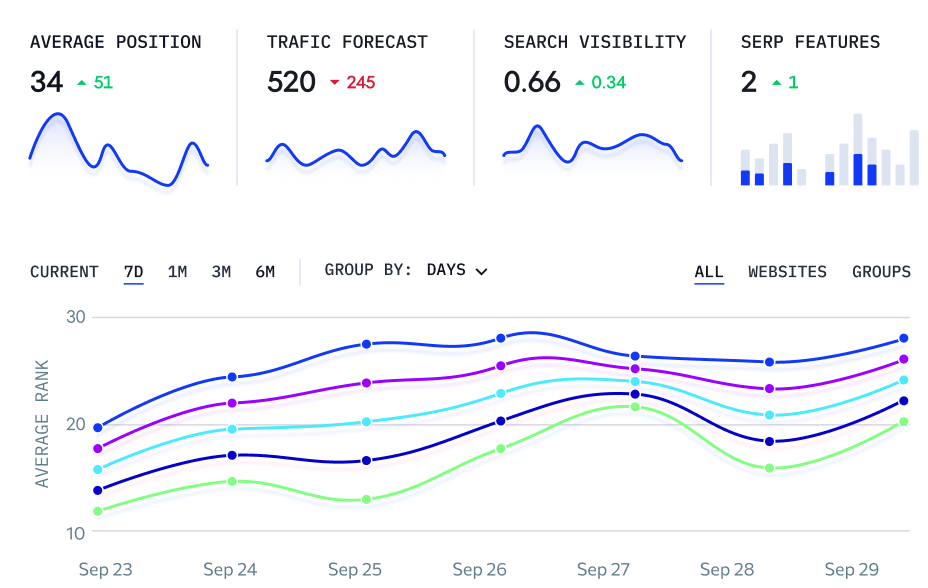
Ubersuggest is the cheapest way to own a real SEO toolkit, and the only tool here with a lifetime option. It started as a simple keyword suggestion tool, grew under Neil Patel into a full platform with keyword research, competitor overviews, site audits, content ideas, and backlink data, and it kept its small-site pricing. Individual at $29 per month covers one domain with 150 searches a day and 125 tracked keywords. Business at $49 covers 7 domains. Enterprise at $99 covers 15. For a site owner checking SEO a few times a month, that is plenty.
The lifetime deal is the part no rival matches. Individual lifetime costs $290 once, Business $490, Enterprise $990, and the monthly prices pay back in about ten months against those one-time fees. Lifetime offers have appeared and disappeared as promotions before, so treat the current offer as time-limited and confirm it is still on the pricing page before budgeting on it. Even without it, the monthly price undercuts every suite here except Mangools on annual billing, and the interface is easier to explain to a client or a boss than a dense suite report.
The limits are honest ones. Backlink data is thinner than Ahrefs or Majestic, keyword tracking caps are low for agencies, and the tool suits owners who check SEO weekly, not analysts who live in data all day. Promotional pricing also confuses the picture: some visitors see $12, $20, and $40 monthly rates, which reflect regional or promotional pricing, while the figures quoted here are the US list prices. Check the price your checkout shows, in your currency, before comparing.
Best for: small site owners, bloggers, and solo marketers who want a low-cost toolkit they can keep for years.
Official site: Ubersuggest
What we like about Ubersuggest
- Extra users cost only $5 per month each on all plans
- add-on packs (extra projects, keywords, searches, AI prompts) are all $5 per month
- a 7-day trial is available on monthly plans.
What could be better
- Lifetime plans are final and non-refundable
- Enterprise caps at 15 projects, so larger agencies outgrow it
- AI features are limited to small prompt allowances per plan.
Price: Individual $29/month; Business $49/month; Enterprise $99/month. Lifetime options $290, $490, and $990 one-time. Free tier with limits available.

6. Serpstat: Best Budget All-in-One Moz Alternative
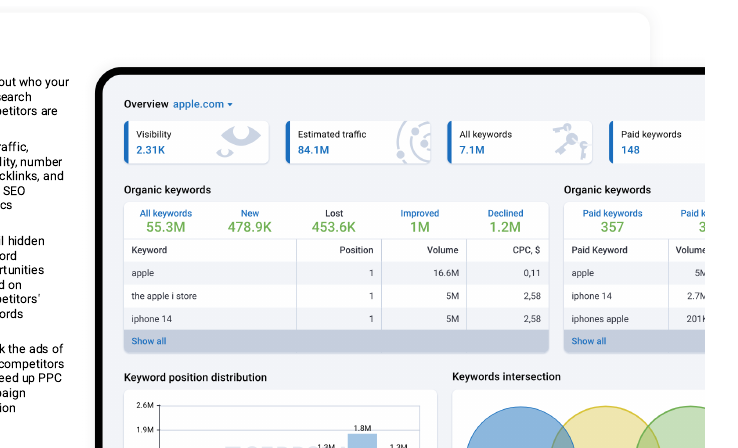
Serpstat is the budget all-in-one that agencies in Eastern Europe and freelancers worldwide have used for years, and it deserves more attention in English-language roundups than it gets. One subscription covers keyword research, rank tracking, backlink analysis, site audits, keyword clustering, PPC research, and content tools. The interface is denser than Mangools and less polished than Semrush, but the data per dollar is strong, and the plan ladder scales cleanly from solo to agency.
Individual at $69 per month ($50 billed annually) includes 5 projects, 100 daily searches, 10,000 position checks a month, and 30,000 audit pages. Team at $129 ($100 billed annually) removes the project cap, raises daily searches to 500, and unlocks API access. Team x2 and Agency scale to 1,000 and 5,000 daily searches. The clustering tool is a quiet strength: it groups thousands of keywords by search-result similarity, so a content plan for a large site can be built from one export instead of weeks of manual sorting.
The trade-offs sit in depth and polish. Backlink data is smaller than Ahrefs, the audit tool on Individual does not render JavaScript, so a headless storefront needs Team at least, and API access waits for Team. The 7-day trial also verifies a card with a small refundable charge on some accounts, which surprises buyers who expect a no-card trial. None of that disqualifies it. It means Serpstat suits a buyer who wants one affordable subscription and will learn its quirks, not a buyer who wants Ahrefs depth at a third of the price.
Best for: freelancers and small agencies that want a full toolkit at a budget price and can live with a denser interface.
Official site: Serpstat
What we like about Serpstat
- Official MCP server with dozens of tools works with AI assistants on Team and above
- invoice billing is available on Team plans and above
- keyword clustering groups keywords by result similarity.
What could be better
- Individual has no API access and no JavaScript rendering in audits
- Agency is the only tier with phone support
- the trial card verification charge catches some buyers by surprise.
Price: Individual $69/month ($50 billed annually); Team $129/month ($100 billed annually); Team x2 $209/month ($169 billed annually); Agency $499/month ($410 billed annually). 7-day free trial.
7. Screaming Frog: Best Technical Moz Alternative
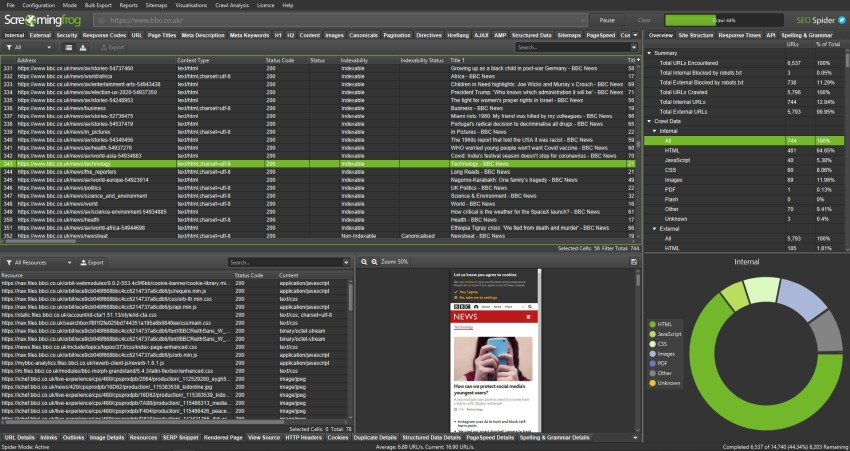
Screaming Frog is not a Moz replacement. It is a specialist that does one Moz job, site audits, better than any suite here, and it belongs on this list because technical audits are where Moz users most often hit a wall. The SEO Spider is a desktop crawler for Windows, macOS, and Linux. Point it at a site, and it walks every link the way a search bot does, collecting status codes, titles, meta descriptions, redirects, hreflang, duplicates, and hundreds of other checks in one crawl.
The free version crawls up to 500 URLs, which covers most small business sites outright, with no sign-up and no card. The paid licence at $279 per user per year (£199) removes the URL limit and unlocks saved crawls, crawl comparison, scheduling, JavaScript rendering, custom extraction, and integrations with Google Analytics, Search Console, and PageSpeed Insights. For a technical audit of a 50,000-page site, nothing in a browser tab matches a desktop crawler with your machine behind it.
What it does not do matters as much as what it does. There is no keyword research, no rank tracking, no backlink index, and no cloud dashboard for clients to log into. Pair it with a research tool, Mangools or Ubersuggest for a small site, Ahrefs or SE Ranking for an agency, and you have a stronger stack than Moz alone for less money in some combinations. Buy it alone expecting a suite, and you will be disappointed in a week.
Best for: technical SEOs, auditors, and site owners fixing crawl, redirect, and metadata problems at scale.
Official site: Screaming Frog
What we like about Screaming Frog
- Log File Analyser is a separate companion product for crawl-budget work, sold separately at £149 per year
- version 24 added an MCP server connection for AI workflows
- volume discounts start at five licences.
What could be better
- One licence covers one user on one machine at a time
- there is no monthly billing, only an annual licence
- crawl capacity on huge sites is limited by your own hardware.
Price: Free up to 500 URLs per crawl; paid licence $279 per user per year (£199). No monthly option.
8. Surfer SEO: Best Content Moz Alternative
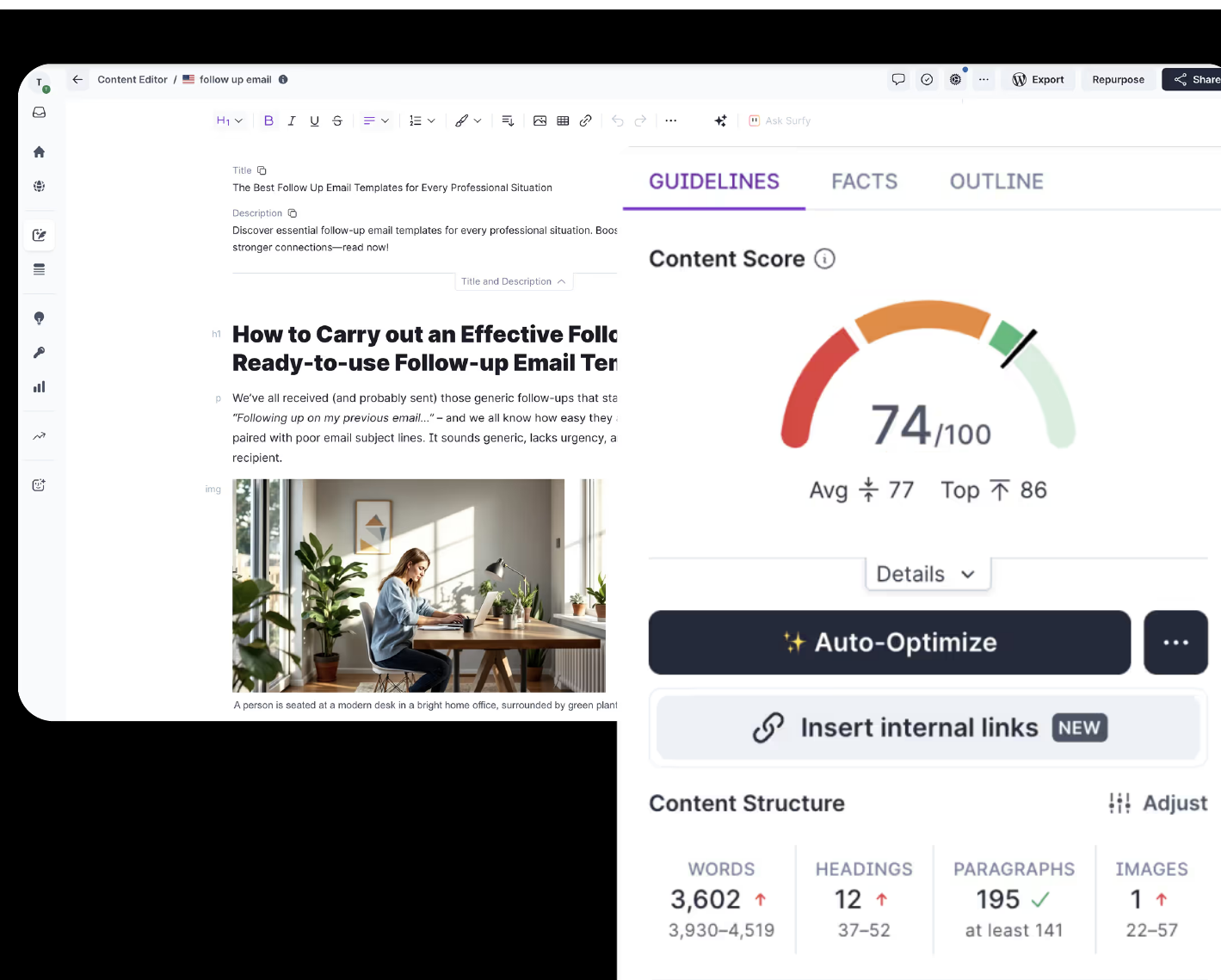
Surfer SEO replaces the part of Moz that content teams actually miss: knowing what a page needs to rank. Its Content Editor scores a draft against the pages already ranking for a target keyword, covering terms, headings, word count, and structure, and it updates as you write. The SERP Analyzer shows why the top pages rank, and Topical Maps plan clusters of articles around a topic instead of one-off posts. For a team publishing weekly, that feedback loop is worth more than another keyword list.
The plan ladder changed in May 2026, and this is the trap in older guides. Essential, Scale, and Scale AI were retired and replaced with Discovery, Standard, Pro, and Peace of Mind. Discovery costs $59 per month ($49 billed annually) with 10 Content Editor documents a month. Standard costs $119 ($99 billed annually) with 30 documents. Pro costs $219 ($182 billed annually) with the same document count but more seats and daily AI prompt tracking. Peace of Mind costs $359 ($299 billed annually) with unlimited documents. Enterprise starts from $999. If a guide still quotes Essential at $99, it is describing a retired ladder.
Surfer is a content tool, not a suite, and buying it as a Moz replacement alone leaves keyword research, backlinks, and rank tracking uncovered. New accounts get a 7-day free trial of the Pro plan, there is also a 7-day money-back guarantee, and API access waits for the top tiers. Pair it with Mangools or Ubersuggest for research, or with Ahrefs for a full stack, and the combination is stronger than Moz for a content-led site. Buy it alone, and you will still need a second tool within a month.
Best for: content teams, bloggers, and agencies that publish regularly and want data-backed briefs and drafts.
Official site: Surfer SEO
What we like about Surfer SEO
- Google Docs and WordPress integrations let writers optimise without leaving the draft
- AI tracker covers 11 AI platforms on paid tiers
- Audit credits are included monthly on Standard and above, so regular content audits do not need a separate purchase.
What could be better
- Rank Tracker is not included on lower tiers in the retired ladder and remains a separate consideration
- AI article generation is billed as separate credits on top of the plan
- document limits are yearly caps on some tiers, not simple monthly resets.
Price: Discovery $59/month ($49 billed annually); Standard $119/month ($99 billed annually); Pro $219/month ($182 billed annually); Peace of Mind $359/month ($299 billed annually); Enterprise from $999/month. 7-day money-back guarantee.
9. SpyFu: Best Competitor Moz Alternative
SpyFu is the competitor spyglass in this list. Type in a rival domain and it shows the keywords it ranks for, the ads it runs, and how both changed over time. The PPC history is the part Moz never matched: you can see which ad copy a competitor tested, which keywords it bought, and when it stopped. For a team planning paid search beside organic, or for an agency pitching a client with proof of what rivals spend, that history is the pitch.
The SEO side is solid for its price. Searches and data exports are capped at 10,000 rows on Basic and unlimited on Pro + AI and Team, domain overviews summarise a rival in one page, and Kombat-style comparison reports show keyword gaps between your site and two competitors at once. Sales leads tools on higher tiers find contact details for outreach, which suits agencies prospecting in a niche. It is not a backlink specialist like Majestic, and its index is smaller than Ahrefs, so link prospecting stays shallow. Use it for competitor keywords and ads, not for link building.
SpyFu’s ladder, from its official pricing page, is Basic $39 per month, Pro + AI $119, and Team $249, with annual billing saving 25 percent (Basic $29, Pro + AI $89, and Team $187 per month billed annually). A 30-day money-back guarantee softens the risk.
Best for: marketers and agencies that plan around competitor keywords, ad history, and outreach prospecting.
Official site: SpyFu
What we like about SpyFu
- 10+ years of history on every plan, including Basic
- unlimited searches and downloads on Pro + AI and Team plans
- extra seats are cheap add-ons compared with suite seat prices.
What could be better
- Site Audit crawl pages are capped by plan (Basic 50,000 pages a month, Pro + AI 500,000, Team 2 million)
- backlink depth trails Ahrefs and Majestic
- lifetime or annual discount terms have changed repeatedly, so old guides mislead.
Price: Basic $39/month; Pro + AI $119/month; Team $249/month. Annual billing saves 25% (Basic $29/month, Pro + AI $89/month, Team $187/month billed annually). 30-day money-back guarantee.
10. Majestic: Best Link Intelligence Moz Alternative
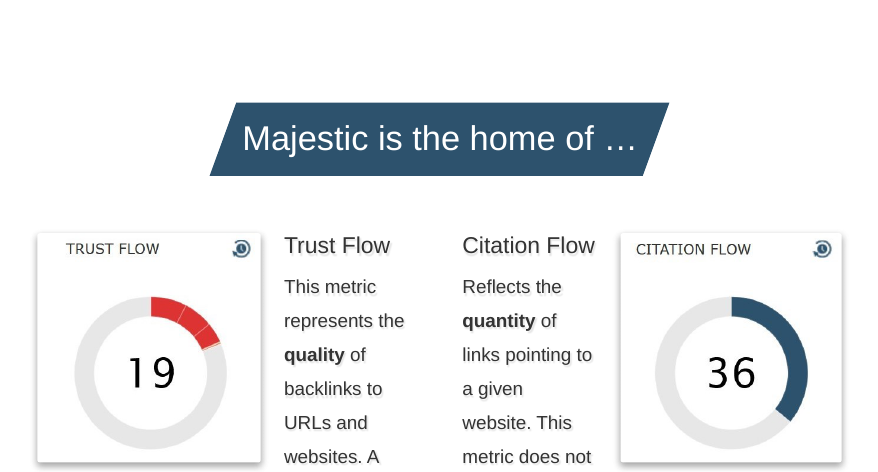
Majestic is the purest link tool here, and the only one built entirely around mapping the web. It crawls and indexes links into two indexes: a Fresh Index of recently seen links and a Historic Index going back years. Trust Flow scores link quality, Citation Flow scores link quantity, and the gap between them tells you at a glance whether a profile is strong or just large. Link prospectors, auditors, and agencies doing due diligence on a domain live in these reports.
The workflow that justifies the price is link investigation. Site Explorer shows a domain’s backlinks, referring domains, anchor text, and link context. Clique Hunter finds sites linking to several competitors but not to you, which is a ready-made outreach list. Compare Sites lines two domains up against each other, and the Bulk Backlink Checker processes lists at scale. For a link building campaign, or for checking a domain before buying it, that depth beats a suite’s backlink tab, which is usually a summary.
Majestic is a specialist, so the gaps are obvious. There is no keyword research worth using, no rank tracking beyond a Search Console reader on Pro, no site audit, and no content tool. Lite at $49.99 per month covers the Fresh Index only, with 1 million analysis units. Pro at $99.99 adds the Historic Index, Compare Sites, Clique Hunter, and custom reports, with 20 million units. The API plan starts at $399.99 with 100 million units and five users. Buy Lite for occasional checks, Pro for real link work, and pair either with a research tool for everything else.
Best for: link builders, auditors, and buyers checking a domain’s link history before investing in it.
Official site: Majestic
What we like about Majestic
- Topical Trust Flow breaks link quality down by topic category
- the Historic Index reaches back years, unlike most fresh-only indexes
- Link Context shows the surrounding text of a link, with the anchor and nearby copy included.
What could be better
- Lite excludes the Historic Index entirely
- the API plan has no money-back guarantee while Lite and Pro offer 7 days
- all prices exclude VAT, so EU buyers pay more than the headline rate.
Price: Lite $49.99/month ($41.67 billed annually); Pro $99.99/month ($83.33 billed annually); API $399.99/month ($333.33 billed annually). 7-day money-back guarantee on Lite and Pro.
Pricing: What You Actually Pay
The headline prices hide three different meters, and the meter decides the bill. Most suites charge per user: every person with an account costs the monthly rate. Mangools charges per account, with seats bundled into Premium and Agency. Screaming Frog charges per licence per year, with no monthly option at all. SpyFu and Ubersuggest add cheap seats on top of a base plan. A three-person team on Ahrefs Lite pays $129 plus two $40 seats, $209 a month, while the same three people on Serpstat Team pay $129 a month with three users included. The headline ranking flips once seats are counted.
Work one example through. A solo blogger with one site: Mangools Basic at $37.70 billed annually, or Ubersuggest Individual at $29 monthly, or Screaming Frog free for audits. Total: $29 to $38 a month, plus a free crawler. A small agency with six clients: SE Ranking Core at $103.20 billed annually, plus the Agency Pack at $69 for white-label reports, totals $172.20, against Ahrefs Standard at $249 plus seats. A content team publishing 30 articles a month: Surfer Standard at $99 billed annually plus a research tool, against Semrush Pro+ at $248.17 billed annually for the combined stack. The cheapest stack is the one that matches your team shape, not the one with the lowest entry price.
Watch the second meter hiding under the first. Annual billing is prepaid on Semrush and Surfer, not spread monthly, so the yearly invoice lands at once. Add-ons stack fast: Ahrefs Brand Radar from $199, SE Ranking Agency Pack from $69, Semrush toolkits on top of the base plan, and Majestic VAT for EU buyers. Add the tier you will actually need, not the entry tier, to the comparison, and the ranking changes.
Screenshot your Moz campaigns, tracked keywords, and custom reports before cancelling. No tool here imports a Moz campaign cleanly, so those screenshots are your rebuild spec for the new tracker. The ten minutes per campaign saves hours of guessing which keywords you were actually watching.
How to Choose the Right Moz Alternative
Check what you already pay for before buying anything new, then match the tool to the job, not to the brand.
Pick Ahrefs if backlinks and competitor research decide your work and you will use the depth weekly. Pick Semrush if SEO, PPC, content, and AI visibility need one subscription and one report. Pick Mangools if you are a beginner or a blogger and simplicity matters more than depth. Pick SE Ranking if you run client reports every week and want the most tracked keywords per dollar. Pick Ubersuggest if budget is the deciding factor and a lifetime deal appeals to you. Pick Serpstat if you want a full toolkit at a budget price and can learn a denser interface. Pick Screaming Frog if technical audits are the job, and pair it with a research tool. Pick Surfer SEO if content optimisation is the bottleneck and you publish regularly. Pick SpyFu if competitor keywords and ad history drive your planning. Pick Majestic if link intelligence is the whole job.
Then test before committing. Use the free plans and trials in this order: Mangools free plan for keyword feel, SE Ranking 14-day trial for tracking accuracy, Serpstat 7-day trial for interface tolerance, Screaming Frog free crawl for audit depth. Run your real keywords and your real site through each one. A tool that feels right on your own data is the right tool, whatever a comparison table says.
Moving From Moz Without Losing Your Data
Start with an inventory, not a signup. List every Moz campaign, the keywords it tracks, the custom reports you send clients, and the Domain Authority scores your team quotes. Export what Moz lets you export, and screenshot the rest. Domain Authority will not transfer: no other tool uses it, and the replacement scores (Domain Rating, Authority Score, Trust Flow, Domain Trust) are measured on different indexes, so a DA 40 site might show DR 55 or Authority Score 35. Tell clients and stakeholders that change is coming before the first new report lands, or the first report will look like a ranking collapse that never happened.
Rebuild tracking in the new tool and run both platforms side by side for at least two weeks. Watch the new tool’s limits against your real workload: a free plan that looked fine on paper may hit its search cap on your busiest research day. Set up scheduled reports in the new tool before cancelling Moz, and confirm where new audit data will live. Keep MozBar, the free Moz browser extension, if you still want a quick Domain Authority check on any page while you transition, since it works with a free Moz account.
FAQs
What is the best Moz alternative overall?
Ahrefs, for most teams. It replaces Moz keyword research, backlink analysis, rank tracking, and audits with deeper data, and its Lite plan at $129 per month is the realistic starting point for serious work. Semrush is broader if you also need PPC and content tools.
Is there a free Moz alternative?
Yes, in parts. Mangools has a free plan with daily lookup limits, Ubersuggest has a free tier, Screaming Frog crawls up to 500 URLs free, and Ahrefs has a free plan for sites you verify. No single free tool replaces all of Moz Pro, so most free users pair two tools.
What replaces Domain Authority?
Each tool has its own score: Domain Rating at Ahrefs, Authority Score at Semrush, Trust Flow at Majestic, and Domain Trust at SE Ranking. All run 0 to 100, all measure link strength differently, and none is used by Google. Compare a site against itself over time in one tool, not across tools.
Which Moz alternative is cheapest for a small site?
Ubersuggest Individual at $29 per month, or Mangools Basic at $37.70 billed annually. Ubersuggest also offers a $290 lifetime option. If your site is under 500 pages, add Screaming Frog free for audits and you have a complete small-site stack for under $40 a month.
Can one tool replace Moz Pro completely?
Yes, for most teams, if you choose a full suite: Ahrefs, Semrush, SE Ranking, or Serpstat. Specialist tools like Screaming Frog, Surfer SEO, SpyFu, and Majestic cover only part of the job, so they work best beside a suite or a rank tracker, not alone.
Which Moz alternative is best for agencies?
SE Ranking Core, for tracking value and reporting, or Ahrefs Standard for backlink depth. SE Ranking tracks 2,000 keywords a day for $129 a month and builds client reports in the same dashboard. Ahrefs costs more per seat but gives deeper competitor data.
Do Moz alternatives track AI search results?
Several now do. SE Ranking includes AI search tracking across five engines in Core, Semrush bundles AI visibility in its Starter, Pro+, and Advanced plans, Ahrefs sells Brand Radar as an add-on from $199 per month, and Surfer tracks AI prompts on its higher tiers. Check the prompt allowance and the engines covered before buying for AI visibility.
When does it make sense to stay on Moz Pro?
More often than comparison posts admit. If your tracked keywords fit the plan you already pay for, if your team knows the interface, if clients expect Domain Authority in reports, and if you use Moz Local or its learning resources, switching buys you little. Stay until a cap, a missing feature, or a price rise actually hurts.
Check your keyword cap first, then pick Ahrefs, SE Ranking, or a budget tool
Check your keyword cap first, then pick Ahrefs for depth, SE Ranking for agency value, or Mangools and Ubersuggest for budget. Add Screaming Frog free for audits whatever suite you choose, and add Majestic or SpyFu only when link intelligence or competitor ad history is the job. Run your busiest two weeks on the new tool before cancelling Moz, and let your real keyword list settle it.
This kind of research, applied to your growth
If you run a SaaS business, SaaS Harvest can do this kind of digging in your market and turn it into search traffic that signs up.