

Trello alternatives are the first thing most teams search for when a Trello board stops being enough, and that moment usually arrives quietly. One day the board has ten lists and it still makes sense. A few months later it has forty lists, cards are hiding work, and nobody can say which deadline matters most. Trello is still a lovely tool. It is fast, it is simple, and a new person can understand a board in five minutes. But its free plan stops at 10 collaborators and 10 boards per workspace, and the views that make a growing project readable, calendar, timeline, dashboard, and map, sit on Premium at $10 per user per month. When a team needs dependencies, time tracking, or a report that shows who is overloaded, Trello has no answer of its own. My direct opinion is that most teams leaving Trello should land on Asana, because it keeps the board habit Trello users love and adds the structure, timelines, and reporting that Trello holds back. But the honest answer depends on your team, and this guide covers ten tools so you can find the one that fits your work, your budget, and your patience for setup. Which of these sounds more like you: a team that wants a stronger Trello, a team that wants something cheaper, or a team that wants a tool that does far more than a board?
This guide compares the tools the way a buyer would: prices are checked against the vendors’ official pricing pages, setup, views, automations, AI features, integrations, and team controls are compared from vendor pricing pages, user reviews and demo videos, and a typical month is worked out for a ten-person team on each one. You will find a side-by-side table, a pricing deep dive, a worked monthly cost example, a migration section, and clear guidance on who should pick each tool. Every price here is a US list price checked against the vendor pricing page on 8 November 2026, and where a price depends on your choices we say so plainly and tell you to check the live page before you pay.
One thing to know before you start comparing: there is no single best Trello alternative, only a best one for your kind of work. A software team that runs sprints needs something very different from a marketing team that plans campaigns, and a solo freelancer needs something different again. The ten tools below cover that whole range, from a free task list you can set up in ten minutes to a database platform that runs a whole department. Read the Quick Picks for the short answer, then read the section for the tool that catches your eye.
Quick Picks: The Short Version
Asana
Best for most teams leaving Trello, with the same board habit, plus timelines, dependencies, and reporting that Trello does not offer.
Price Free Personal plan for up to 2 users. Starter from $10.99 per user per month billed annually.
Free plan available, plus unlimited free guests on paid plans.
ClickUp
Best free option for small teams that want a real workspace at $0, with unlimited tasks, docs, and members on the free plan.
Price Free Forever plan at $0. Core from $9 per user per month billed annually.
Free Forever plan available, no credit card required.
Todoist
Best value for people and small teams that want simple shared task lists, with the cheapest honest paid plan on this list.
Price Beginner plan free. Pro from $5 per month billed annually, Business from $8 per user per month.
Free plan available, no credit card required.
Trello Alternatives at a Glance
| Tool | Best for | Free plan | Paid from (per user/month, annual) | Standout strength |
|---|---|---|---|---|
| Asana | Most teams leaving Trello | Yes | $10.99 Starter | Timelines, dependencies, and reporting |
| monday.com | Visual boards and dashboards | Yes | $9 Basic, $12 Standard | Flexible boards and dashboards |
| ClickUp | Most features per dollar | Yes | $9 Core | Docs, chat, and dashboards in one place |
| Notion | Docs plus tasks | Yes | $10 Plus | One workspace for notes and projects |
| Jira | Software and agile teams | Yes | $9.70 Standard | Sprints, backlogs, and dev workflows |
| Wrike | Complex enterprise work | Yes | $10 Team | Gantt charts and resource planning |
| Basecamp | Simple flat-priced teamwork | Yes | $29 per month flat (Freelancer) | One price, no per-user fees |
| Smartsheet | Spreadsheet-style planning | No, 30-day trial | $9 Pro | Grid views with real reporting |
| Airtable | Data-heavy tracking | Yes | $20 Team | Databases with many views |
| Todoist | Simple shared task lists | Yes | $5 Pro, $8 Business | Fastest task capture, lowest price |
Prices are US list prices checked against vendor pricing pages. Basecamp charges a flat monthly price per account, not per user. Jira Standard is $9.70 per user per month on monthly billing for teams of 1 to 100 users, with annual band pricing starting at $950 a year for up to 10 users. Check the live figures on each vendor pricing page before you commit, because vendors change prices and limits.
How We Compared These Trello Alternatives
These tools are compared as a working team would use them, from the first hour to the twelfth month, based on vendor pricing pages, user reviews and demo videos. Setup speed mattered, and so did the quiet costs that appear later: a plan limit that arrives mid-project, a feature that only exists on the tier above the one you bought, and a view your team needs that turns out to be an add-on. A tool that looks cheap on day one can become expensive by month six, and a simple-looking tool can become slow once your projects grow past a dozen boards.
Our criteria were simple and practical. First, how quickly can a non-technical person set up a project and invite the team? Second, what does a real month cost for ten people, counting the plan a team would actually buy? Third, how good are the views: boards, lists, timelines, calendars, and Gantt charts? Fourth, how much busywork can automations and AI take away? Fifth, how well does the tool fit the kind of work you do: client work, software sprints, content, or data-heavy tracking? A good project tool should fit your work, and it should not force your work to fit it.
We checked the vendor pricing pages for every price in this article. Prices are US list prices checked against vendor pricing pages. Where a price depends on your choices, for example your seat count or your billing cycle, we give you the annual billing figure and note the monthly figure beside it, so you can adjust the maths for your own team. If a figure was uncertain, we left it out or told you to check the live page. That matters in project software, because a per-user price that looks small becomes a real bill when you multiply it by ten people and twelve months.
Why Teams Look Beyond Trello
Trello earned its place. It is one of the fastest project tools ever built, and teams that run simple projects with clear deadlines often love it for years. The problems start when a team grows, or when its work gets more complicated than a card with a due date. The free plan covers only 10 collaborators and 10 boards per workspace, so a real team pays from the start. Standard at $5 per user per month billed annually adds unlimited boards and more automation, which is fair. But the views growing teams ask for first, calendar, timeline, table, dashboard, and map, all sit on Premium at $10 per user per month. That is double the Standard price, and it is the jump that sends most teams shopping.
Price is only half the story. Trello is deliberately simple about how work should look, and that simplicity does not suit every team. Software teams that run sprints want backlogs and story points as first-class citizens. Teams that live in documents want their notes and their tasks in the same place. Teams that track numbers want a grid, a formula, and a report, not a card. And teams that bill clients want time tracking and budgets built in. Trello does some of these things through Power-Ups, but a Power-Up is an add-on, and add-ons are where tools quietly break. A native feature you use every day beats an add-on you have to maintain.
The ten tools below each solve a different version of this problem. Some are stronger. Some are cheaper. Some are simpler in a different way. None of them is Trello with a different logo, and that is the point. The right alternative is the one that matches the work you actually do, at a price you can defend in a budget meeting, with a learning curve your team will survive. Start with the Quick Picks, then read the two or three sections that match your team, and use the worked cost example near the end to see what each one really costs at ten people.
1. Asana: Best Overall Trello Alternative
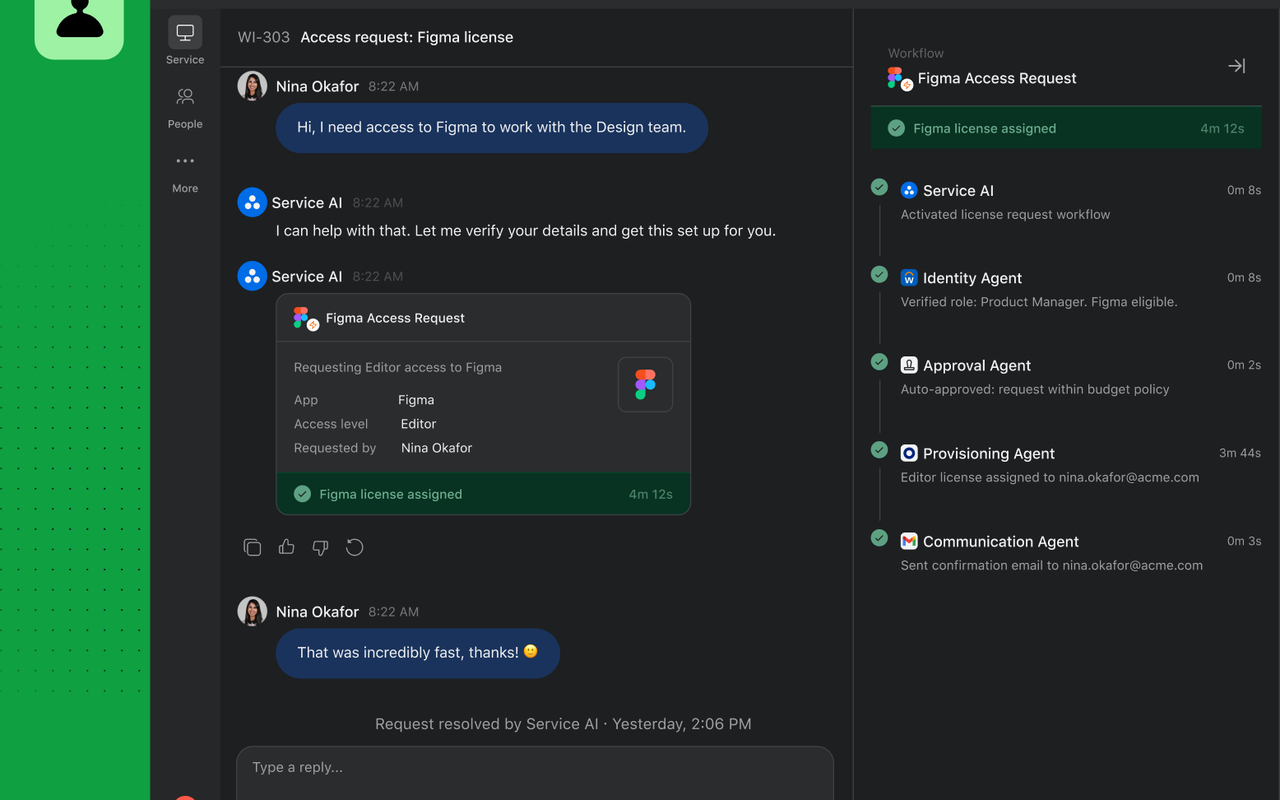
Asana leads this list because it is the most direct Trello replacement here: it keeps the board habit and adds the structure Trello holds back. The board is familiar to any Trello user, with tasks as cards, columns for status, and drag and drop that works the way your hands expect. The difference is what sits behind the board. A task can depend on another task, so the plan shows you what is blocked and what is ready. A project can show as a timeline, so a slipped date moves the work after it instead of silently breaking the plan. Trello shows you the cards. Asana shows you the plan, and for a team whose projects have dates that depend on each other, that is the whole reason to switch.
Reporting is the most useful part of Asana for managers. Dashboards pull numbers from several projects into one view, so a team lead can see workload, overdue work, and progress without opening every board. The reporting feels grown up in a way Trello’s dashboard view does not, because it was built for people who run many projects at once, not one board at a time. Forms turn intake into tasks automatically, so a request from another team lands in the right project with the right fields filled in, instead of arriving as a chat message that someone has to copy by hand.
Automations and AI are built into the daily flow. You can set a rule that moves a task, notifies an owner, or changes a status when something happens, and the rule builder reads like plain English, so a non-technical manager can build one without help. The newer AI side adds teammates that triage work and draft updates, plus a studio where a team can build its own small automations. None of this replaces good process, but it takes the repetitive clicks out of a week. If your team spends its Fridays updating statuses and chasing owners, Asana automations pay for themselves quickly.
Read the pricing page closely before you commit. The free Personal plan suits one or two people managing personal projects. Starter costs $10.99 per user per month billed annually, or $13.49 billed monthly, and it covers timelines, Gantt views, reporting dashboards, unlimited automations, forms, and custom fields. Advanced costs $24.99 per user per month billed annually, or $30.49 billed monthly. Enterprise is custom priced. For a ten-person team, Starter costs $109.90 a month, which is more than Trello Premium at $100, so Asana does not win on price. It wins on fit, and that is the trade to weigh. If your team mostly needs boards, Asana is dearer than Trello. If your team needs plans, it is cheaper than the workarounds Trello forces on you. For a deeper look at this tool on its own, read our guide to Asana alternatives, which covers what teams pick when even Asana feels heavy.
What we like about Asana
- Personal plan keeps unlimited tasks and projects for up to 2 users, with list, board, and calendar views.
- AI Teammates allow 5 requests per user a month, up to 50 per account, on Starter.
- AI Studio includes 50,000 credits a month on Starter and 75,000 on Advanced.
What could be better
- File uploads on the free plan cap at 100 MB per file.
- Portfolios, goals, and resource management sit on Advanced, so Starter teams miss the planning layer.
- Native time tracking needs Advanced, while Starter relies on integrations for it.
2. monday.com: Best Trello Alternative for Visual Boards
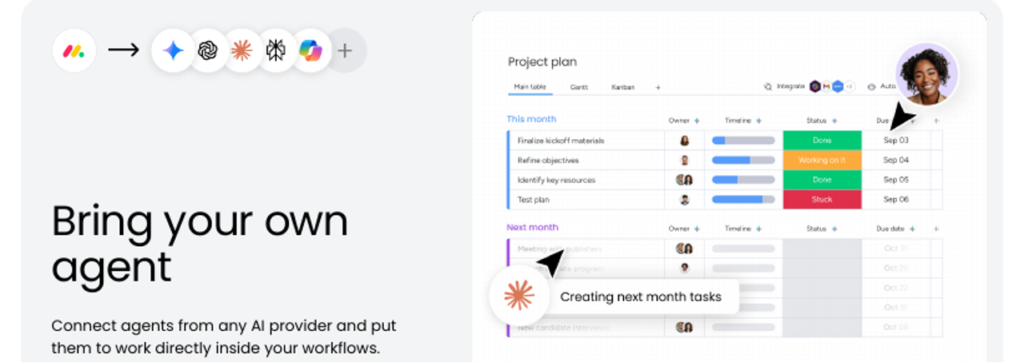
monday.com leans hardest on colour and boards, and that is why Trello users often love it at first sight. The board is the heart of the tool, just like Trello, with tasks as rows, columns for status, owner, dates, and priorities, and colour everywhere so a board reads at a glance. The difference is how much you can shape it. Columns can be almost anything: a dropdown, a number, a formula, a file, a timeline, a person. A marketing team can build a campaign board, an ops team can build a hiring pipeline, and a product team can build a launch tracker, all in the same workspace, without any of them feeling like they are using the wrong tool. Trello keeps its cards simple, and some teams like that. Teams that want to bend the tool to their process will prefer monday.com.
Dashboards are where monday.com pulls ahead of Trello for managers. You can pull numbers from several boards into one dashboard, chart them, and see workload, budget, and progress in one place. The dashboard builder is visual and forgiving, and it is the kind of thing a team lead can set up in an afternoon and then rely on every Monday morning. Trello has a dashboard view on Premium, but it reads one board at a time, and the cross-board reporting that a manager needs is thin. On monday.com, dashboards and the views that feed them are part of the everyday experience from Standard upward, which is where most teams land.
Automations and AI are built into the daily flow. You can set a rule that moves a task, notifies an owner, or changes a status when something happens, and the rule builder reads like plain English, so a non-technical manager can build one without help. The newer AI side adds agents that triage tickets, screen candidates, and draft updates, plus a Sidekick assistant that answers questions about your boards. None of this replaces good process, but it takes the repetitive clicks out of a week. If your team spends its Fridays updating statuses and chasing owners, monday.com automations pay for themselves quickly.
The pricing page deserves a close read before you choose a tier. The free plan is small and suits a solo user trying the tool. Paid work management plans start at $9 per seat per month for Basic on annual billing, $12 for Standard, and $19 for Pro, with Enterprise priced on request. Standard is the honest starting point for a team, because Basic leaves out automations and integrations, which are the reason most teams pick monday.com at all. Monthly billing costs more: $12, $14, and $24 for the same three tiers. For a ten-person team, Standard costs $120 a month, which is more than Trello Premium at $100, so monday.com does not win on price. It wins on flexibility, and that is the trade to weigh. For a head-to-head on the two most popular options, read our Asana vs Monday comparison before you decide.
What we like about monday.com
- AI credits come with every paid plan: 1,000 a month on Basic, 2,000 on Standard, and 3,000 on Pro.
- Docs, Whiteboard, and Forms live inside the same workspace, so notes and intake stay next to the work.
- Unlimited free viewers on paid plans mean stakeholders can look without taking a paid seat.
What could be better
- Paid plans need a minimum of 3 seats, so a one or two person team still pays for three.
- Guest access starts on Standard, so Basic keeps outside collaborators out.
- Annual billing is charged as one upfront payment, which is a bigger single hit to the budget.
3. ClickUp: Best Free Trello Alternative
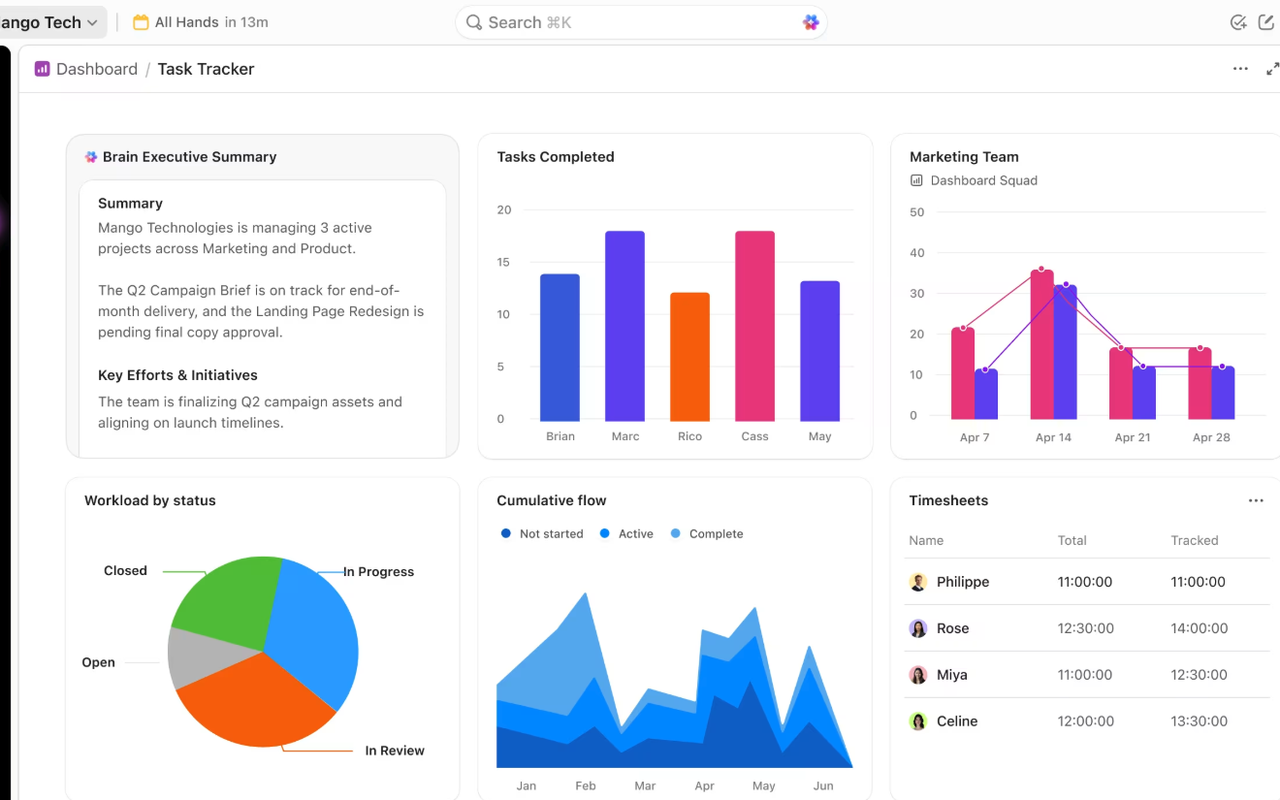
ClickUp aims to cover everything in one workspace, and more than most tools that make that promise, it gets close. Tasks, docs, chat, dashboards, goals, and time tracking all live under one roof, which means a team can stop paying for three or four separate tools and stop losing work between them. A task can hold a doc, a doc can hold tasks, and a chat thread can turn into a task with one click. That sounds like a small thing until you have lived with it for a month and realised how much of your week used to be copying context from one app to another. Trello is calmer and more focused, and some teams will always prefer that. ClickUp is for teams that want one place for all of it.
Views are the other reason ClickUp wins on value. List, board, calendar, Gantt, timeline, workload, mind map, and table views all come from the same data, and switching between them takes one click. A manager can look at the workload view on Monday, a developer can look at the board on Tuesday, and nobody has to rebuild anything. Trello has solid views too, but calendar, timeline, table, dashboard, and map all sit on Premium, and the deeper reporting sits nowhere at all. On ClickUp, the view that shows you who is overloaded is available early, and that is the view that prevents burnout in a busy quarter.
The free plan deserves a real mention, because it is the most generous free plan on this list. You get unlimited tasks and subtasks, docs, kanban boards, calendar view, sprint management, and time tracking without paying anything, which means a small team can run real work on ClickUp for months before it needs to pay. The catch, and there is always one, is that ClickUp packs so much in that new users can feel lost for the first week. The interface has more buttons, more menus, and more settings than Trello, and a team that wants a tool to disappear into the background may find ClickUp loud. Give it two weeks and a short team training session, and most teams settle in.
Pricing is simple to read. The Free Forever plan costs $0. Core costs $9 per user per month billed annually, with a regular price of $12 shown struck through on the pricing page. Business costs $17 per user per month billed annually, with a regular price of $25. Enterprise is custom priced, and the MAX plan, which bundles the full AI engine with enterprise controls, costs $100 per user per month billed annually. For a ten-person team, Core costs $90 a month, which is less than Trello Premium at $100, and it covers far more ground.
What we like about ClickUp
- Free plan includes 60 MB of storage.
- Core includes 1,000 automations a month, so routine work starts running itself early.
- Support runs 24/7 even on the free plan, which is rare at this price.
What could be better
- Paid plans add guest seats in fixed bundles, so inviting many outside collaborators gets fiddly.
- Business is needed for advanced dashboards, timesheets, and private views.
- The MAX plan is a steep jump from Business, so the full AI engine is a big budget step.
4. Notion: Best Trello Alternative for Docs Plus Tasks
Notion does not look like the other tools here, which is exactly why it belongs on this list. It is not a project manager first. It is a workspace where documents, wikis, databases, and tasks live together, and a team that writes a lot will feel at home in minutes. A project page can hold the brief, the meeting notes, the task database, and the launch checklist in one place, and every task is a page you can open, comment on, and link to from anywhere. Trello keeps tasks and docs in separate worlds, with Power-Ups bridging the gap. Notion removes the gap entirely, and for content teams, product teams, and startups that document everything, that is a real advantage.
Databases are the engine underneath it all. A task database can show as a board, a calendar, a timeline, a gallery, or a table, and each view can filter and sort differently, so the same project looks like a sprint board to developers and a content calendar to marketers. You can link databases together, so a task can pull in its project, its owner, and its deadline from other pages without copying anything. The learning curve is real: a team that opens Notion for the first time will spend a week building before it feels natural, and a team that wants a ready-made project tool out of the box may find that week annoying. But once the setup is done, Notion bends further than any other tool here.
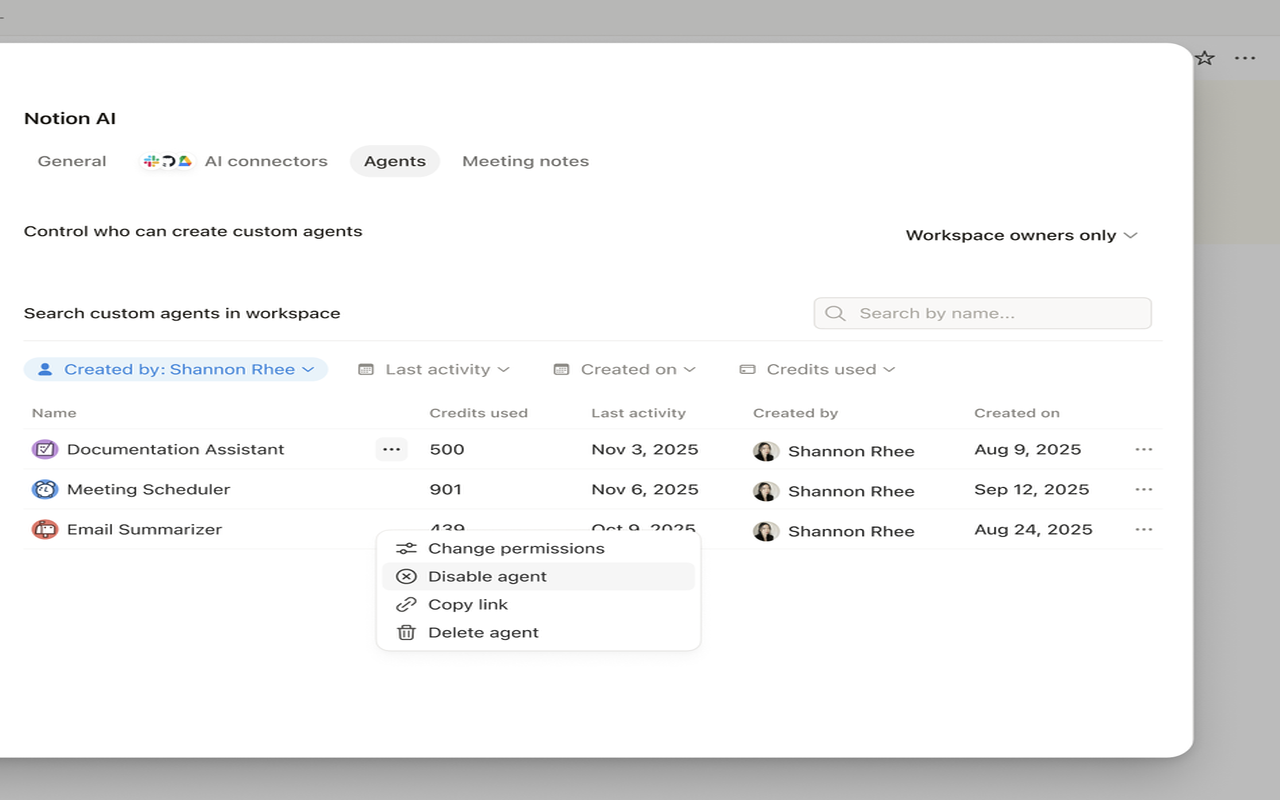
AI is now woven through Notion in a way that suits writing-heavy teams. The workspace AI can draft, summarise, and search across your pages, and the newer agent features can triage feedback, resolve tickets, and automate reporting. For a team that already keeps its knowledge in Notion, that AI has context no other tool can match, because it reads the same pages your team reads. The catch is that the full AI set is not on every plan, and the price of the plan that carries it is double the entry plan, so check which tier you actually need before you budget.
Pricing is clean. The Free plan costs $0 and suits one person or a team trying the tool. Plus costs $10 per member per month billed annually, or $12 billed monthly. Business costs $20 per member per month billed annually, or $24 billed monthly. Enterprise is custom priced. For a ten-person team, Plus costs $100 a month, which matches Trello Premium, and Business costs $200 a month. If Notion feels close but you want to see what else exists in its category, our guide to Notion alternatives is a useful next read.
What we like about Notion
- Free plan keeps 7 days of page history, and Plus extends it to 30 days with 5 GB file uploads.
- Students and educators get Plus free with a school email address.
- Guests are free of charge, so clients and contractors can view pages without a paid seat.
What could be better
- Full Notion AI, with Agent, AI Meeting Notes, and Enterprise Search, needs the Business tier.
- Custom Agents cost extra credits at $10 per 1,000 Notion credits.
- Free workspaces with two or more members hit a block limit and must upgrade to keep adding content.
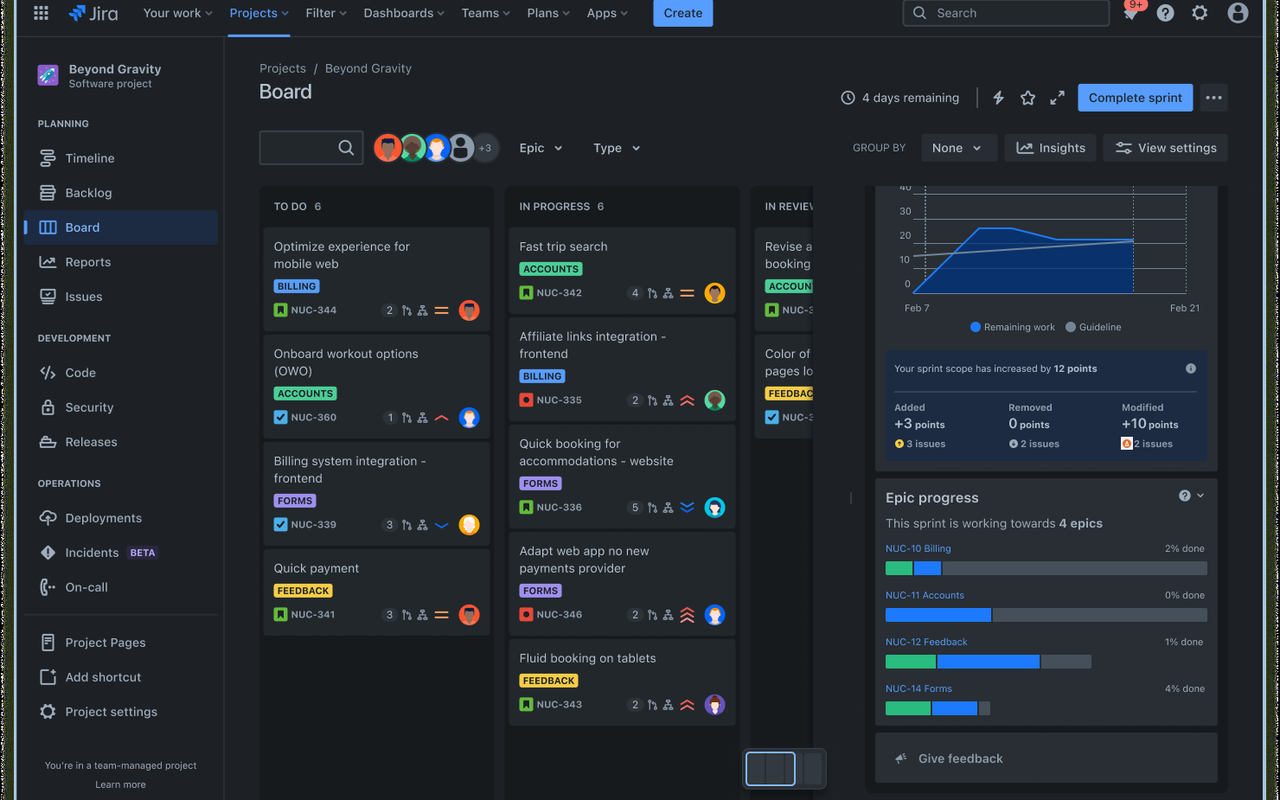
5. Jira: Best Trello Alternative for Software Teams
Jira is the tool Trello users move to when their work is software, and the reason is simple: Jira was built for agile development from the start, and it shows in every screen. Backlogs, sprints, story points, epics, and burndown charts are first-class citizens, not features bolted on later. A developer can pick up a ticket, see its history, its linked code, and its place in the sprint, and move it through a workflow that matches how the team actually ships. Trello can run a sprint, and many teams do, but its sprint support feels like a general board doing a software job. Jira feels like it was designed by people who ship code.
For larger teams, the timeline view in Plans is the part that matters most. You can see several teams, several projects, and their dependencies on one timeline, and spot the collision before it happens. Cross-project planning is the feature that makes Jira worth its learning curve for engineering managers, because it answers the question Trello struggles with: who is doing what, when, and what happens if this slips by two weeks. The automation rules help too: a rule can assign a ticket, move it, or notify a channel when a condition is met, and the rules run across projects, so a team can standardise its workflow instead of relying on everyone remembering the process.
The cost of all this power is complexity. Jira has more settings, more admin screens, and more concepts than Trello, and a team without a Jira admin will spend its first month learning the tool instead of using it. Non-technical teams often bounce off Jira for exactly this reason: the interface is dense, the terminology is software-specific, and a simple project can feel buried under process. But for a software team, that density is the product. The same screens that confuse a marketing team are the screens a scrum master lives in. If your team writes code, Jira is the serious answer on this list. Trello and Jira come from the same company, Atlassian, so the move between them is smoother than most migrations, and the importer handles the cards well.
Pricing needs a careful read, because Jira charges by user band. The Free plan costs $0 and covers up to 10 users. Standard costs $9.70 per user per month on monthly billing for teams of 1 to 100 users, and annual billing is priced by user band, starting at $950 a year for up to 10 users. Premium costs $19.60 per user per month on monthly billing for the same band. Enterprise is custom priced and billed annually. For a ten-person team, the annual Standard band costs $950 a year, which works out to about $79 a month, and that undercuts Trello Premium at $100 a month. The AI features, built around the Rovo assistant, come with every paid plan. If software is your world, our guide to Jira alternatives is worth a read too, because it covers the tools teams pick when even Jira feels heavy.
What we like about Jira
- Free plan covers 10 users with 2 GB of storage, enough for a small dev team to start.
- Standard includes 1,700 automation runs a month, so routine triage runs itself.
- Premium adds a 99.9% uptime SLA and unlimited storage for teams that cannot go down.
What could be better
- Rovo AI credits are capped at 25 per user a month on Standard, so heavy AI use needs a higher tier.
- Setup and admin need a Jira admin, not a casual user, and small teams often lack one.
- Enterprise pricing is only shown for annual billing, so monthly buyers must talk to sales.
6. Wrike: Best Trello Alternative for Complex Work
Wrike is the enterprise answer on this list, and it is built for teams whose projects have phases, dependencies, budgets, and resource plans that all need to stay in sync. The Gantt chart is the star: you can see a whole project as a timeline, drag a phase, and watch the dependent tasks move with it, which is the kind of planning Trello does on its Premium tier and Wrike does from its Team plan upward. Request forms let other teams submit work with the right details attached, so intake stops being a chat message and a prayer. Proofing lets reviewers annotate files inside Wrike, which creative teams love, because feedback stops living in email threads.
Resource management is where Wrike earns its price for larger organisations. You can see who is overloaded, who has capacity, and what happens to the plan if a key person takes two weeks off, and you can rebalance before the deadline slips. That view is the difference between a tool that tracks tasks and a tool that manages work, and it is the reason agencies and enterprise teams pick Wrike over lighter tools. The dashboards and reports go deep too, with real-time visibility across projects, which matters when a director asks for a status update and you need an answer in five minutes, not five hours.
The price of that power is a serious learning curve. The interface is dense, the settings run deep, and a team that wants a quick board will find Wrike heavy. The AI features are growing fast, with AI agents and automation actions on the higher tiers, but they are part of a platform that expects an admin to own it. Small teams should think twice before picking Wrike: it is built for organisations with dozens of people and projects, and a ten-person team may find it more tool than it needs. But if your work is complex, regulated, or spread across departments, Wrike is the tool that keeps up.
Pricing starts with a Free plan at $0 for essential task management. Team costs $10 per user per month, and Business costs $25 per user per month. Pinnacle and Apex, the top tiers, are priced on request. For a ten-person team, Team costs $100 a month, which matches Trello Premium, and Business costs $250 a month. Check the live figures on the Wrike pricing page before you commit, because the higher tiers are quoted, not published.

What we like about Wrike
- Team plan covers 2 to 15 users, which fits a small department without enterprise pricing.
- Business adds resource management and covers 5 to 200 users for growing organisations.
- Wrike is sold in seat groups of 5 up to 30 users, so adding a few people is simple.
What could be better
- Pinnacle and Apex pricing needs a sales call, so bigger teams cannot budget without talking to Wrike.
- Business and above are annual billing only, with no monthly option.
- Whiteboard costs $15 per user per month extra, on top of the plan price.
7. Basecamp: Best Trello Alternative With Flat Pricing
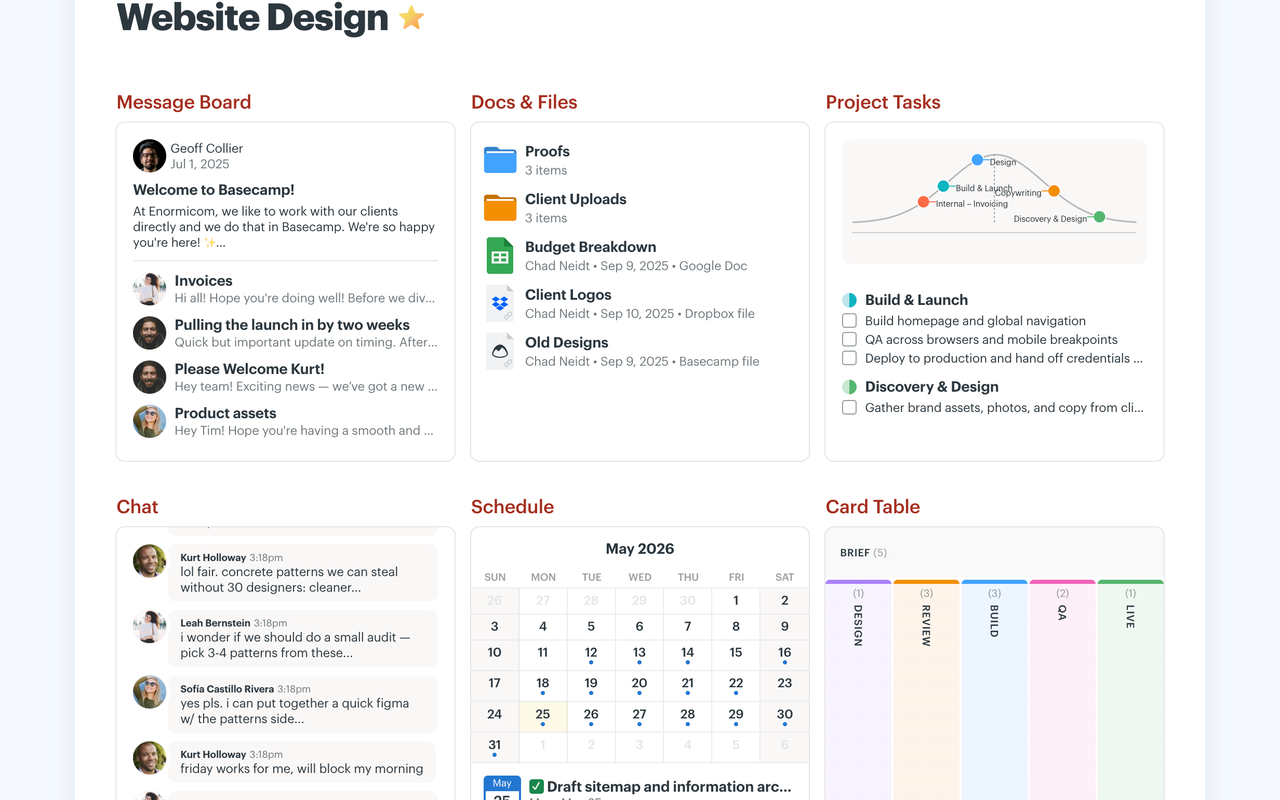
Basecamp is the most opinionated tool on this list, and its fans love it for exactly that reason. Instead of a blank board you shape yourself, Basecamp gives you six tools in every project: a message board, to-dos, a card table, chat, a schedule, and docs and files. That is the whole product. There is no Gantt chart, no custom workflow engine, and no automation builder, and Basecamp is proud of that. The argument is that most teams do not need those things, and that the tools they do need should be simple, obvious, and in the same place. After a decade of project tools getting more complex, Basecamp’s simplicity feels like a deep breath.
The communication tools are the real product. Message boards replace long email threads, group chat replaces scattered chat channels, and automatic check-ins ask the team simple questions on a schedule, like what did you work on today, and collect the answers in one place. A manager can read the check-ins over coffee and know where every project stands, without a status meeting. To-dos are simple, with owners and due dates, and the card table gives you a kanban view when you need one. Hill Charts, Basecamp’s way of showing progress as a hill you climb, give a project a sense of shape that a percentage bar never does. For a small team that talks a lot and plans a little, this is a better fit than Trello.
The pricing is the other reason teams pick Basecamp, and it is unlike anything else here. There are no per-user fees. You pay a flat monthly price for the account, and you add as many people as the package allows. That makes budgeting simple: the price does not grow every time you hire someone, and inviting a client or a contractor does not add to the bill. The catch is that Basecamp has no free tier worth using for a real team, and a team that needs dependencies, time tracking, or deep reporting will outgrow it. But for a small business that wants one calm place for its projects, Basecamp is hard to beat.
Pricing is flat and simple. The Free plan costs $0. Freelancer costs $29 per month, Pro costs $79 per month, Pro Plus costs $99 per month, and Pro Unlimited costs $199 per month billed annually. For a ten-person team, Pro at $79 a month covers everyone, which is less than Trello Premium at $100 a month, and the price stays $79 whether the team is five people or ten. No credit card is needed to try it, and cancellation is self-serve with no retention call.
What we like about Basecamp
- Free plan covers 1 project and 3 users, so a solo user can try the real product.
- Pro Unlimited covers unlimited users and unlimited projects for one flat monthly price.
- Nonprofits get 10% off, and K-12 schools and universities use Basecamp free for class work.
What could be better
- Freelancer caps at 3 projects and has no time tracking, so growing teams must upgrade early.
- Pro Plus is the first tier with time tracking, at $99 a month.
- No Gantt chart or dependencies for deadline-driven work that needs a timeline.
8. Smartsheet: Best Trello Alternative for Spreadsheet Lovers
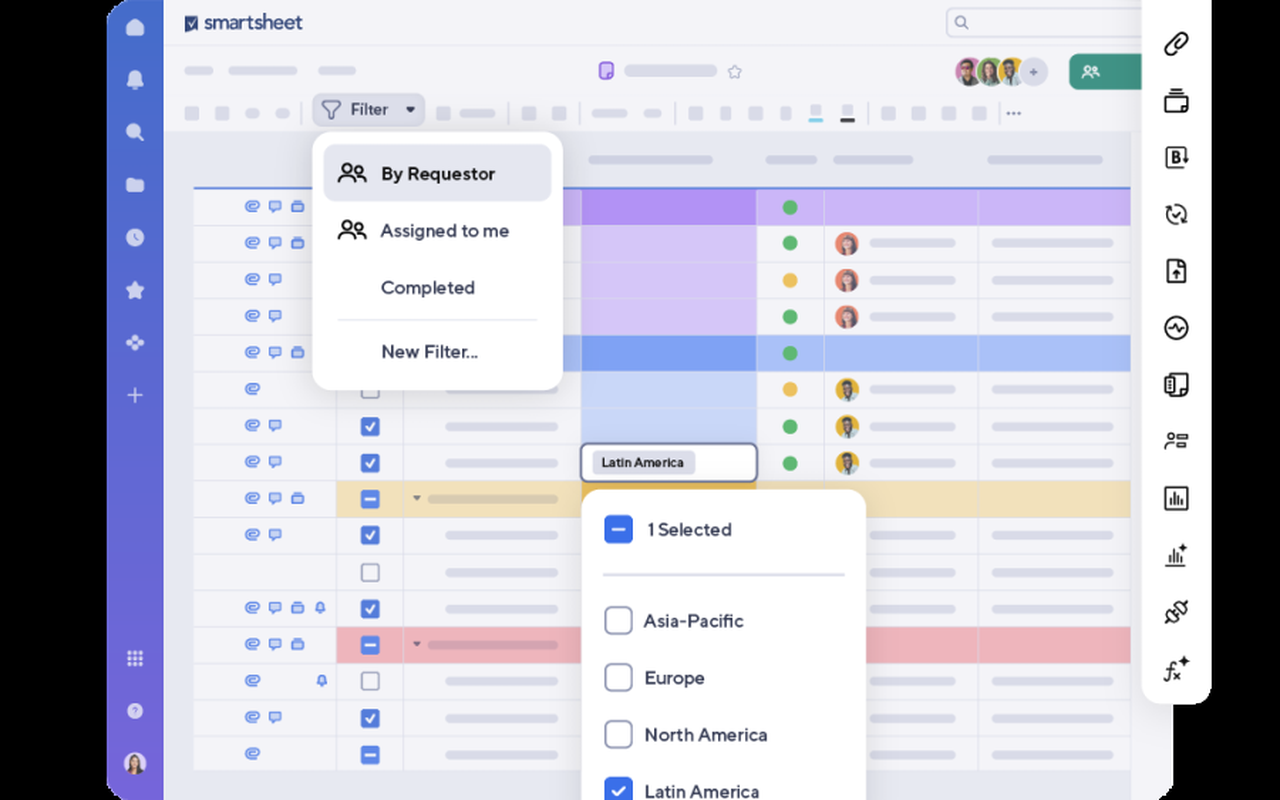
Smartsheet looks like a spreadsheet, and that is its superpower for a certain kind of team. If your team lives in Excel or Google Sheets, Smartsheet feels familiar from the first minute: rows, columns, formulas, and filters, with the power of a project tool underneath. A row can be a task with an owner, a due date, a status, and attachments, and the same sheet can show as a grid, a card view, a calendar, or a Gantt chart. Trello hides the spreadsheet behind boards and lists, and for some teams that is cleaner. For a team that thinks in rows and columns, Smartsheet meets them where they are.
Reporting is the most useful part of Smartsheet. Dashboards pull data from many sheets into one view, and reports can filter across projects to show, for example, every overdue task owned by one department, or every project over budget this quarter. That cross-project reporting is stronger than Trello’s, and it is the reason operations teams, finance teams, and construction and healthcare teams pick Smartsheet. Automations handle the routine work: approval requests, reminders, and status changes run on rules, and the forms feature turns intake into a sheet row automatically, so a request from another department lands in the right place with the right fields filled in.
The weakness is the interface. Smartsheet is powerful, but it is not pretty, and a team that cares about design will find it plain next to Trello or monday.com. The learning curve is gentle for spreadsheet users and steeper for everyone else, because the mental model is a sheet, not a board, and some concepts, like sheet permissions and cross-sheet formulas, take time to learn. AI features are growing, with formula help and summaries, but Smartsheet is not an AI-first tool, and teams that want a smart assistant will find more of that elsewhere. If your work is data-heavy, process-driven, and reported upward, Smartsheet is the serious answer.
Pricing starts with a free trial, and there is no free plan. Pro costs $9 per member per month billed annually, or $12 billed monthly. Business costs $19 per member per month billed annually, or $24 billed monthly. Enterprise is custom priced. For a ten-person team, Pro costs $90 a month, which undercuts Trello Premium at $100 a month, and Business costs $190 a month. Check the live figures on the Smartsheet pricing page before you commit, because the plan limits change with team size.
What we like about Smartsheet
- Pro covers 1 to 10 members with unlimited contributors, so viewers never take a paid seat.
- Business starts at 3 members with unlimited guests and contributors for wider teams.
- 30-day free trial needs no credit card, so a team can test real work before paying.
What could be better
- The entry Pro tier lacks the resource views and advanced controls larger teams need.
- Enterprise pricing is custom, so bigger organisations must talk to sales to budget it.
- Dashboard and report builders take time to learn, so new teams lean on templates first.
9. Airtable: Best Trello Alternative for Data-Heavy Work
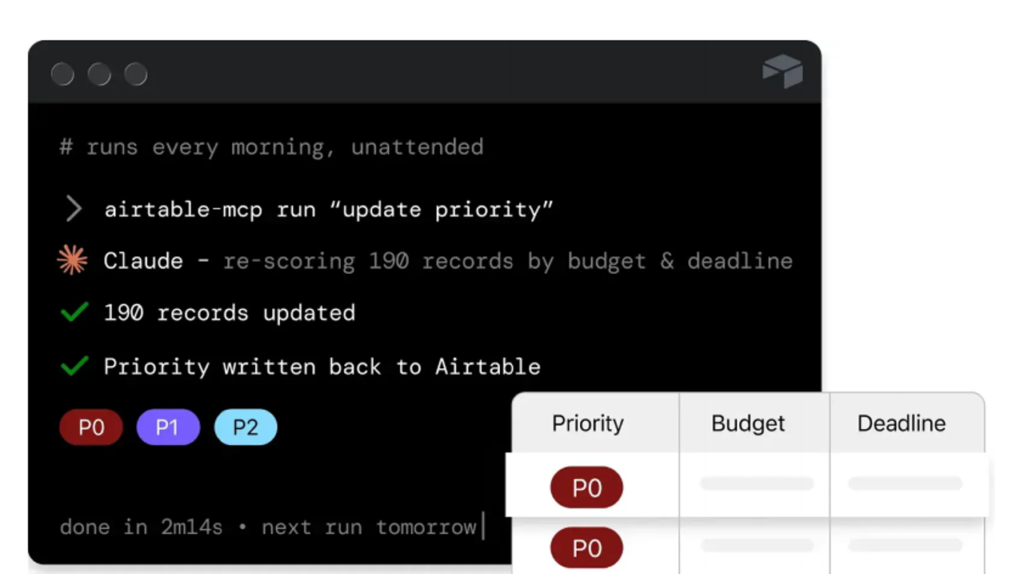
Airtable is the tool Trello users move to when their work is really data wearing a project disguise. It looks like a spreadsheet, but every row is a record with fields, attachments, links to other tables, and a history of changes. A content team can track articles, authors, deadlines, and publish dates in one base. An ops team can track inventory, vendors, and orders. A product team can track features, feedback, and releases. Trello cards hold a little structured data through custom fields, and then they run out of room. Airtable is built for the team that ran out of room.
Views are what make Airtable feel like a project tool and not a database. The same base can show as a grid, a calendar, a Kanban board, a timeline, a Gantt chart, a gallery, or a form, and each view can filter and sort differently, so the same work looks like a board to one person and a calendar to another. Interfaces let a team build a simple front end on top of the base, so a client or a manager sees a clean dashboard instead of the raw tables. Automations move records, send alerts, and update fields when something changes, and the newer AI features can summarise, categorise, and draft from the data in the base.
The cost is the learning curve. Airtable is the hardest tool on this list to set up well, because a good base needs thought: which tables, which fields, which links, which views. A team that opens Airtable for the first time will spend a week building before it feels natural, and a team that wants a ready-made board today may find that week annoying. The interface is also busier than Trello, and the price is the highest entry price on this list. But once the setup is done, Airtable handles work that no board tool can touch, and teams that run their operations on it rarely go back.
Pricing starts with a Free plan at $0 for individuals and very small teams. Team costs $20 per user per month billed annually, and Business costs $45 per user per month billed annually. Enterprise Scale is custom priced. For a ten-person team, Team costs $200 a month, which is double Trello Premium, so Airtable does not win on price. It wins on depth, and that is the trade to weigh. Check the live figures on the Airtable pricing page before you commit, because the record and automation limits change by tier.
What we like about Airtable
- Free plan covers 1,000 records per base with up to 5 editors, enough to test a real workflow.
- Charges apply only to editors, so read-only collaborators are free on paid plans.
- Interfaces turn a base into a clean dashboard for managers and clients.
What could be better
- Team at $20 per user a month is the dearest entry price on this list.
- Business at $45 per user a month is more than double Team, so the full feature set is dear.
- The database model takes a week to learn for teams used to simple boards.
10. Todoist: Best Trello Alternative for Simple Task Lists
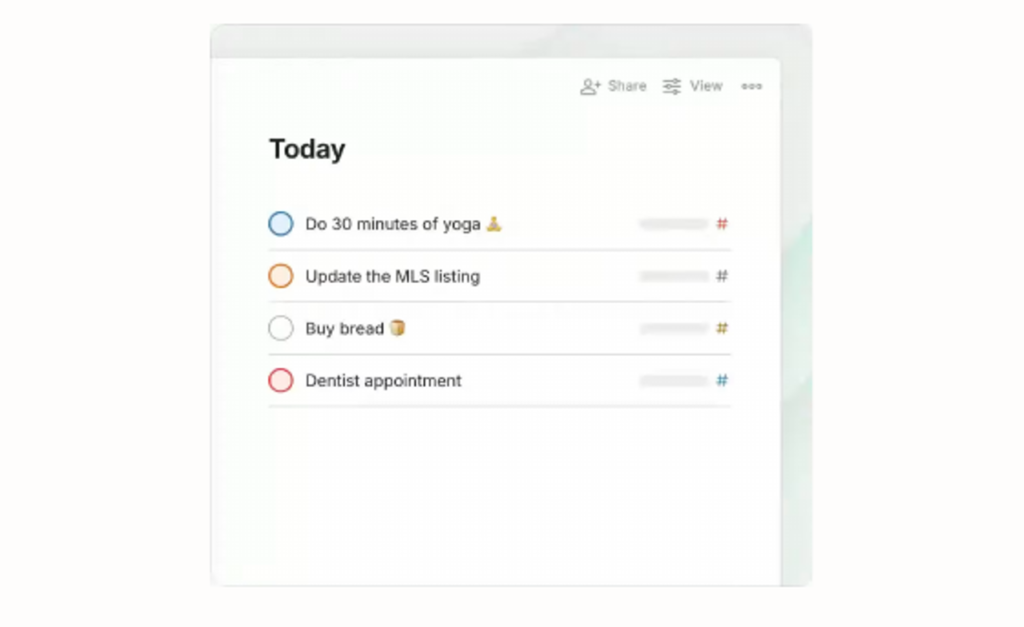
Todoist is the simplest tool on this list, and for many people that is the whole point. There is no board to build, no workflow to design, and no admin screen to learn. You type a task, you give it a date, and it shows up in the right list. Natural language dates mean you can type “every Friday at 9am” and Todoist understands it, which is the kind of small thing that saves a minute a dozen times a day. Trello is simple too, but it is simple in the shape of a board. Todoist is simple in the shape of a list, and for a person or a small team that lives by lists, the list wins.
Views cover the basics without fuss. The same project can show as a list, a board, a calendar, or a table, and switching between them takes one click. Filters let you build a view of everything due today, everything assigned to you, or everything with a priority flag, and those filters are the quiet power of the tool. Task Assist, the AI helper, can break a big task into steps, set reminders, and suggest dates, and it stays out of the way when you do not need it. The mobile app is fast, the desktop app is calm, and the whole tool feels designed for people who open it twenty times a day.
The limit is depth. Todoist has no Gantt chart, no dependencies, no workload view, and no real reporting, and a team that outgrows lists will feel those gaps within a year. It is also a personal tool first and a team tool second: sharing works, and team projects, roles, and activity logs exist, but they sit on the Business plan, and the team features are thinner than a full project platform. That is fine. Todoist is honest about what it is: the fastest way to capture and finish tasks, not a platform. Use it for what it is good at, and move on when your work outgrows it.
Pricing is the cheapest on this list. The Beginner plan costs $0. Pro costs $5 per month, or $60 billed yearly. Business costs $8 per user per month, or $96 billed yearly. For a ten-person team, Business costs $80 a month, which undercuts Trello Premium at $100 a month, and Pro at $5 a month is the cheapest paid plan on this list for a solo user. Check the live figures on the Todoist pricing page before you commit, because the project and member limits change by tier.
What we like about Todoist
- Beginner plan covers 5 personal projects with 5 MB file uploads and 3 filter views.
- Pro covers 300 projects with 100 MB uploads, 150 filter views, task duration, and custom reminders.
- Business covers 500 team projects with up to 1,000 members and guests, team roles, and shared templates.
What could be better
- No Gantt chart or dependencies for deadline-driven work that needs a timeline.
- Pro is priced per person, so a team that shares projects properly needs Business at $8 per user.
- Time tracking needs an integration, because it is not built into Todoist.
Pricing: What You Actually Pay
Pricing is where this comparison is decided for most buyers, so it deserves a careful read. The headline price is never the whole story. A tool that costs $5 per user looks cheap until you learn that the feature you need sits on the $10 tier, and a tool that costs $20 per user looks dear until you learn that it replaces two other subscriptions. The table below gives the entry paid price for each tool, and the paragraphs after it explain the catches. Prices are US list prices checked against vendor pricing pages.
Start with the cheapest honest options. Trello Standard at $5 per user per month billed annually is the lowest per-user price here, and it covers a small team well. Todoist Pro at $5 a month matches it for a solo user, and Todoist Business at $8 per user is the cheapest team plan on the list. ClickUp Core at $9 and Smartsheet Pro at $9 sit in the same band, and each one covers a different kind of team. Jira Standard at $9.70 a month on monthly billing sits in that band too. Wrike Team at $10 and Notion Plus at $10 sit in that band as well. Asana Starter at $10.99 and monday.com Standard at $12 are the realistic entry prices there, because Basic at $9 leaves out automations and integrations. Basecamp Pro at $79 a month flat breaks the per-user pattern entirely, and Airtable Team at $20 per user is the dearest entry price on the list.
Three pricing traps deserve attention. First, the free plan is a trial in disguise on some tools and a real workspace on others. ClickUp and Todoist give you a free plan you can run a team on, while Smartsheet gives you a trial and then asks you to pay. Second, the feature you need is often one tier above the entry price. Calendar, timeline, and dashboard views, time tracking, workload views, advanced dashboards, and single sign-on all tend to sit on the second or third tier, so read the plan comparison table before you budget, not after you buy. Third, monthly billing costs more everywhere: Asana Starter rises from $10.99 to $13.49, Notion Plus from $10 to $12, Trello Standard from $5 to $6, and Smartsheet Pro from $9 to $12. Annual billing saves real money, but it asks you to pay a year upfront, so only commit annually once the team has used the tool for a month and still likes it.
Before you pick a plan, count your seats honestly, including the part-timers and the clients you invite in. A per-user price that looks small becomes a real bill at ten seats, and a flat-priced tool like Basecamp starts looking very good once your team passes eight people.
One final pricing warning applies to every tool here. Vendors change prices, and the figure on the pricing page today may not be the figure next quarter. Trello itself moved its prices in past years, and Atlassian raised Jira prices on 13 October 2026, so the tools on this list will do the same. Check the live figures on each vendor pricing page before you commit, and treat any price in this article as a snapshot from 8 November 2026, not a promise. If your workflows also span many apps and you plan to automate across them, our guide to Zapier alternatives is a useful companion read, because the automation tool you pick shapes which project tool fits best.
A Worked 10-Person Team Monthly Cost Comparison
Take a ten-person team and put it on the plan each tool would actually sell it. Not the cheapest plan on the page, and not the enterprise tier, but the plan a real team of ten buys in its first year. The table below shows the monthly cost on annual billing for each tool, using the entry plan that fits a working team. Basecamp is flat priced, so its figure does not grow with seats, and Trello Standard is included as the baseline you are leaving. Jira is shown on its annual band price for up to 10 users, which is cheaper than its monthly rate.
| Tool | Plan used | Monthly cost for 10 people (annual billing) | Yearly cost |
|---|---|---|---|
| Trello | Standard (baseline) | $50 | $600 |
| Basecamp | Pro, flat price | $79 | $948 |
| Jira | Standard, annual band | $79.17 | $950 |
| Todoist | Business | $80 | $960 |
| ClickUp | Core | $90 | $1,080 |
| Smartsheet | Pro | $90 | $1,080 |
| Notion | Plus | $100 | $1,200 |
| Wrike | Team | $100 | $1,200 |
| Asana | Starter | $109.90 | $1,318.80 |
| monday.com | Standard | $120 | $1,440 |
| Airtable | Team | $200 | $2,400 |
The spread is wider than most teams expect. Trello Standard at $50 a month costs less than half of Asana Starter, and Basecamp at $79 flat costs less too, while staying the same price if the team grows to twelve or fifteen people. Jira at $950 a year on its annual band, Todoist Business at $80 a month, and ClickUp and Smartsheet at $90 a month all undercut Trello Premium at $100 a month, which is the tier a growing Trello team usually ends up on. Notion and Wrike at $100 a month match Trello Premium, while Asana Starter at $109.90, monday.com Standard at $120, and Airtable Team at $200 all cost more than Trello Premium. Those three win on fit, which is the point of this whole comparison.
The yearly column is the one to show your manager. Over twelve months, Trello Standard costs $600, Basecamp costs $948, and Jira costs $950 on its annual band, against $1,200 for Trello Premium. But remember what the entry plan leaves out. A team that needs time tracking, workload views, or advanced reporting will step up a tier on most of these tools, and the second tier is where the real comparison happens. Trello Premium at $100 a month, ClickUp Business at $170, Notion Business at $200, and monday.com Pro at $190 are all dearer than Trello Standard, and Airtable Business at $450 is dearer still. Run the same simple maths for your own team, with the tier you actually need, before you decide. Price is a reason to switch, but it should never be the only reason.
Migration From Trello: How to Switch Without Losing Work
Switching project tools sounds harder than it is, and the fear of losing work keeps more teams on Trello than the price ever does. The honest answer is that migration takes an afternoon of planning and a week of running both tools side by side, and it is worth doing properly. Start by listing every live board in Trello, with its owner, its due cards, and its status, and decide which boards move and which ones are finished and can be archived. Most teams find that a third of their boards are done, and archiving them before the move saves real time.
Export comes next. Trello lets you export a board as JSON from the board menu, and most of the tools on this list offer a Trello importer or accept a CSV export that pulls boards, lists, cards, owners, and due dates across directly. Asana, monday.com, ClickUp, and Jira all have Trello import paths, and the rest take a CSV. Run the import on one small board first, check that the cards, dates, and owners landed correctly, and fix the mapping before you import the rest. Comments and attachments are the parts that move least cleanly, so save the important attachments separately and copy the key decisions into the new tool by hand. It is boring work, and it is the work that prevents a lost file three months later.
Run both tools in parallel for one to two weeks. Let the team do new work in the new tool while Trello stays open for reference, and set a clear cut-off date after which Trello is read-only. Tell the team when the switch happens, show them where their boards live now, and give them one short training session on the new tool instead of a long manual nobody reads. The teams that struggle with migration are usually the teams that skipped the parallel week, or the teams that moved everything, including dead boards, and then could not find anything. Move less, test more, and set a date. That is the whole method.
How to Choose the Right Trello Alternative
Choose by the work, not by the feature list. A feature list will tell you that every tool on this page has boards, lists, and calendars, and that is true and useless. What matters is which tool makes your most common day easier. If your most common day is a software sprint, pick Jira. If it is a campaign with dates that depend on each other, pick Asana. If it is data-heavy tracking with reports, pick Airtable or Smartsheet. If it is a small team that needs a list today, pick Todoist. If it is a growing team that wants Trello with more room to shape it, pick monday.com. Start with the work, and the tool follows.
Then check three practical things before you pay. First, the free plan or the trial: use it for two real weeks with a real project, not a demo, and see whether the team still likes it on day fourteen. Second, the tier you actually need: open the pricing page, find the feature you cannot live without, and note which tier carries it, because that tier is your real price. Third, the exit: check that you can export your data, because a tool that locks your work in is a tool you will regret. If your workflows span many apps and you plan to automate across them, pair your pick with an automation tool, and our guide to Zapier alternatives covers the options worth knowing.
Finally, involve the team in the choice. A project tool is only as good as the people who update it, and a tool the team resents is a tool with stale tasks and missed deadlines. Let two or three people try the top two contenders for a week, then ask them which one they would keep. Their answer is worth more than any review, including this one.
Who Should Pick Each Trello Alternative
Pick Asana if you want the closest Trello replacement with more structure, and you are willing to pay $10.99 per user per month for Starter. It fits marketing teams, operations teams, and growing companies that want timelines, dependencies, and reporting without enterprise complexity. Pick monday.com if you want the most visual boards and dashboards, and you are happy to pay $12 per user per month for Standard. It fits teams that shape the tool to their process and want colour-coded boards everyone can read. Pick ClickUp if you want the most features per dollar and you are happy to spend a week learning a bigger tool. It fits startups and small businesses that want docs, chat, and dashboards in one place and want to stop paying for separate tools.
Pick Notion if your team lives in documents and wants tasks in the same place as notes, wikis, and plans. It fits content teams, product teams, and startups that document everything. Pick Jira if your team writes software and runs sprints, because its backlogs, story points, and dev integrations are built for that work and nothing else here matches them. Pick Wrike if your work is complex, spread across departments, and needs Gantt charts, resource planning, and real reporting. It fits enterprise teams and large agencies that have an admin to own the tool. Pick Basecamp if you want one calm place for projects and one flat price that never grows with headcount. It fits small businesses that talk a lot and plan a little.
Pick Smartsheet if your team thinks in spreadsheets and reports upward with dashboards and cross-project reports. It fits operations, finance, and process-driven teams. Pick Airtable if your work is data-heavy and a board cannot hold it, because its databases, views, and interfaces handle tracking that no other tool here can. It fits operations teams, content teams with big pipelines, and anyone whose project is really a dataset. Pick Todoist if your team is small, your work is lists, and you want the fastest capture and the lowest price. It fits freelancers, small teams, and personal projects, and it is the cheapest honest option here.
When Trello Is Still the Right Call
Leaving Trello is not right for every team, and this guide would be dishonest if it pretended otherwise. Trello is still the fastest general board tool on the market, and for a team that runs straightforward projects with clear owners and due dates, it is hard to beat. The interface is simpler than Jira, calmer than ClickUp, and more focused than Notion, and a team that values that calm will miss it elsewhere. The Power-Ups cover a lot of ground too, with calendar, custom fields, and integrations for Slack, Google Drive, and hundreds of other apps, and the quick capture inbox, which gathers to-dos from email, Slack, and Teams into one place, is genuinely useful for busy people.
Trello is also the right call when your team already runs on it and the pain is small. If the complaint is one missing view, check whether Premium at $10 per user per month fixes it before you move ten people to a new tool. Migration costs time, training, and goodwill, and a team that moves for a small saving often finds the new tool has its own gaps. Trello Standard at $5 per user per month is fairly priced for what it covers, and its free plan, with 10 collaborators and 10 boards, is a genuine free tier for a small team, not a trial.
The moment to leave is when the pain is structural, not cosmetic. If your team needs dependencies, portfolios, and resource management and balks at paying for them through add-ons, or if your work is software sprints, data-heavy tracking, or document-heavy planning that Trello handles through workarounds, then the tools above are worth the move. Stay when Trello fits and the bill is fair. Leave when the work has outgrown the tool, not when a review told you to.
Final Thoughts
Trello alternatives are not hard to find, and the ten tools above cover every kind of team that outgrows Trello or outprices it. The short answer is Asana for most teams, ClickUp for the best free plan, and Todoist for the best value, and any of those three is a safe choice. The longer answer is that the right tool depends on your work: Jira for software, Wrike for complex enterprise work, Notion for docs, Basecamp for flat-priced calm, Smartsheet for spreadsheet teams, Airtable for data-heavy tracking, and monday.com for visual boards.
Our recommendation is practical. Shortlist two tools from this guide, use each one for two real weeks with a real project, and let the team vote. Check the tier that carries the feature you need, run the ten-person maths from the table above, and confirm the price on the live pricing page before you pay. Then migrate properly: archive the dead boards, test the import on one board, run both tools in parallel for a week, and set a cut-off date. A project tool is a home for your team’s work, and the right one is the one your team actually opens every morning.
FAQs
What is the best Trello alternative in 2026?
Asana is the best overall Trello alternative for most teams, because it keeps Trello’s board habit, adds timelines, dependencies, and reporting, and costs $10.99 per user per month on Starter billed annually. ClickUp is the best free option, Todoist is the best value, and Jira is the best pick for software teams. The right answer depends on your work, so read the section that matches your team before you decide.
Is there a free alternative to Trello?
Yes. Asana, ClickUp, Notion, monday.com, Jira, Wrike, Basecamp, Airtable, and Todoist all have free plans. ClickUp and Todoist have the most generous free plans for a small team, with ClickUp offering unlimited tasks and members at $0 and Todoist covering 5 personal projects free. Smartsheet has no free plan, only a 30-day trial, so it is not a free alternative in the same sense.
Which Trello alternative is cheapest for a 10-person team?
Basecamp Pro is the cheapest at $79 a month flat, followed by Jira Standard at $950 a year on its annual band, and Todoist Business at $80 a month. ClickUp Core and Smartsheet Pro both cost $90 a month. Trello Premium costs $100 a month for the same ten people, so most of the tools on this list save money at this team size, though Trello Standard at $50 a month is cheaper than all of them.
Can I migrate my boards from Trello to another tool?
Yes. Trello lets you export a board as JSON from the board menu, and most of the tools on this list offer a Trello importer or accept a CSV export. Test the import on one small board first, check that cards, dates, and owners landed correctly, and save important attachments separately, because comments and attachments move least cleanly. Run both tools in parallel for one to two weeks before you set a cut-off date.
Is Asana better than Trello?
It depends on what you value. Asana is stronger, with timelines, dependencies, reporting dashboards, and unlimited automations on Starter, and Starter at $10.99 per user per month costs more than Trello Standard at $5. Trello is simpler, faster to learn, and cheaper for simple boards. Teams that need plans and reports usually prefer Asana. Teams that need a fast board usually stay with Trello.
Is ClickUp better than Trello?
ClickUp gives you more for the money: docs, chat, dashboards, goals, and time tracking in one workspace, with Core at $9 per user per month billed annually against Trello Premium at $10. The price is complexity. ClickUp packs so much in that new users can feel lost for the first week, while Trello is simpler and calmer from day one. Pick ClickUp if you want one tool for everything and you will invest a week in learning it. Pick Trello if you want the simplest tool that does the job.
Which Trello alternative is best for agencies?
Wrike is the best Trello alternative for larger agencies, because it is built for complex work: Gantt charts, resource planning, request forms, and proofing, with Team at $10 per user per month billed annually. Basecamp is the other strong agency pick, with flat pricing, message boards, and group chat for small agencies that talk to clients all day. Airtable is worth a look for agencies whose work is data-heavy, with pipelines and client records in one base.
Does Trello have a free plan?
Yes. Trello Free costs $0 for up to 10 collaborators and 10 boards per workspace, with 250 automation runs a month and 10 MB per file. Standard costs $5 per user per month billed annually, Premium costs $10, and Enterprise costs $17.50. The free plan is a genuine free tier, not a trial, but it is too small for a working team, and the calendar, timeline, dashboard, and map views sit on Premium.
Pick Asana for most teams, ClickUp for the best free plan, Todoist for the best value
Most teams leaving Trello should start with Asana, because it keeps the board habit they know and adds the timelines, dependencies, and reporting Trello holds back, at $10.99 per user per month on Starter. Small teams that want a real workspace for free should pick ClickUp, and people who live by lists should pick Todoist at $5 a month for Pro. Software teams should pick Jira, data-heavy teams should pick Airtable, and everyone else should match the tool to the work, then test it for two real weeks before paying.
This kind of research, applied to your growth
If you run a SaaS business, SaaS Harvest can do this kind of digging in your market and turn it into search traffic that signs up.
